
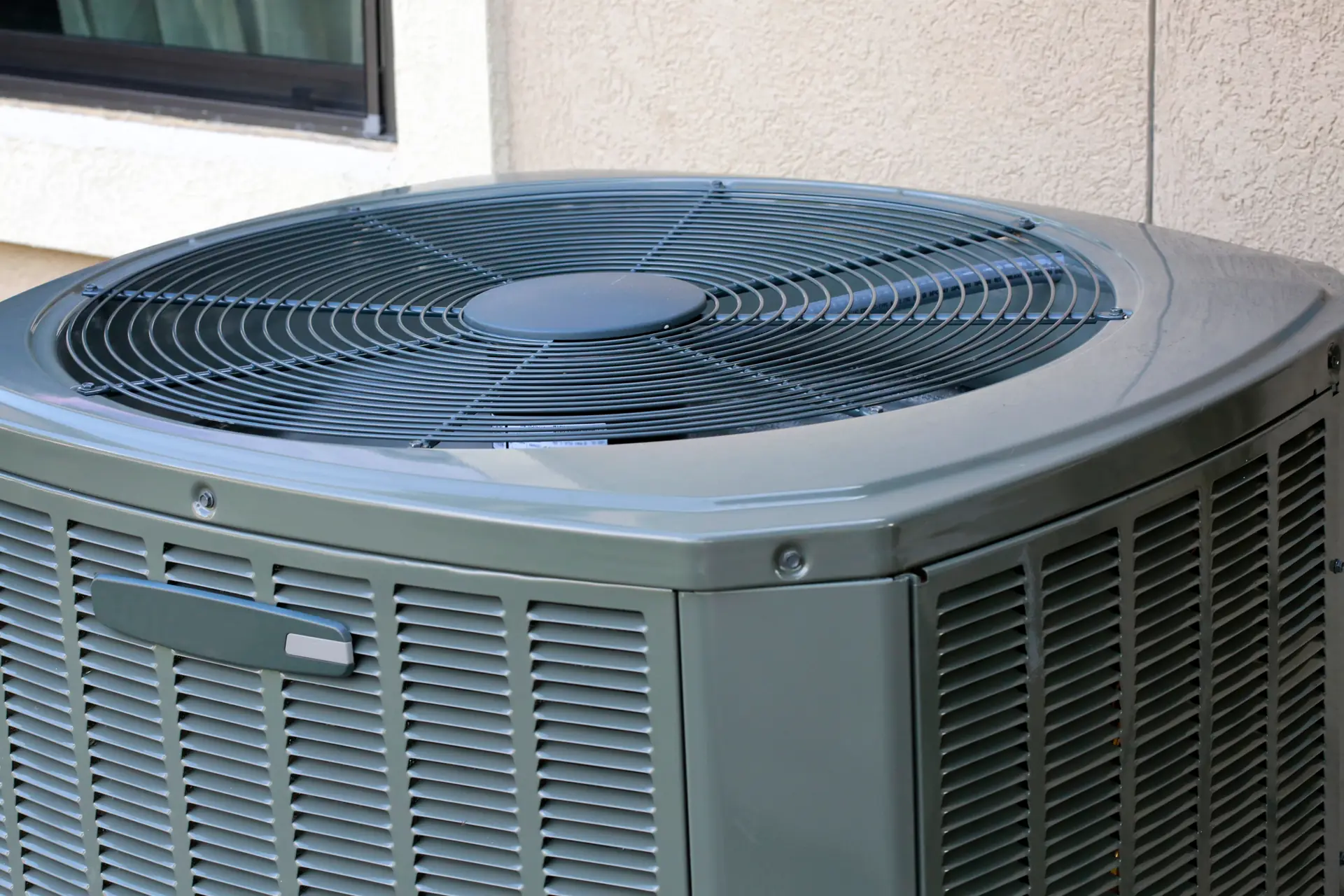
Repair and Service
Central AC Repair in New Bern, NC
Homeowners across New Bern and our surrounding service area rely on GP Heating & Cooling, a family-owned and locally-owned company. When your central air conditioner runs but does not cool, or begins making new noises, our team starts with an honest diagnosis. We are an Armstrong ProTeam Dealer and a Ducane Dealer, and our work is backed by 22 years of experience. Whether the problem is weak airflow, ice on the coil or a failing component, we look for the root cause rather than guessing. We inspect the system, identify the cause and explain your repair options in plain language before any work begins.
What You Can Expect
What New Bern Homeowners Can Expect From Our Repair Work
Five commitments guide every central AC repair we take on, and each one shapes how we diagnose your system.
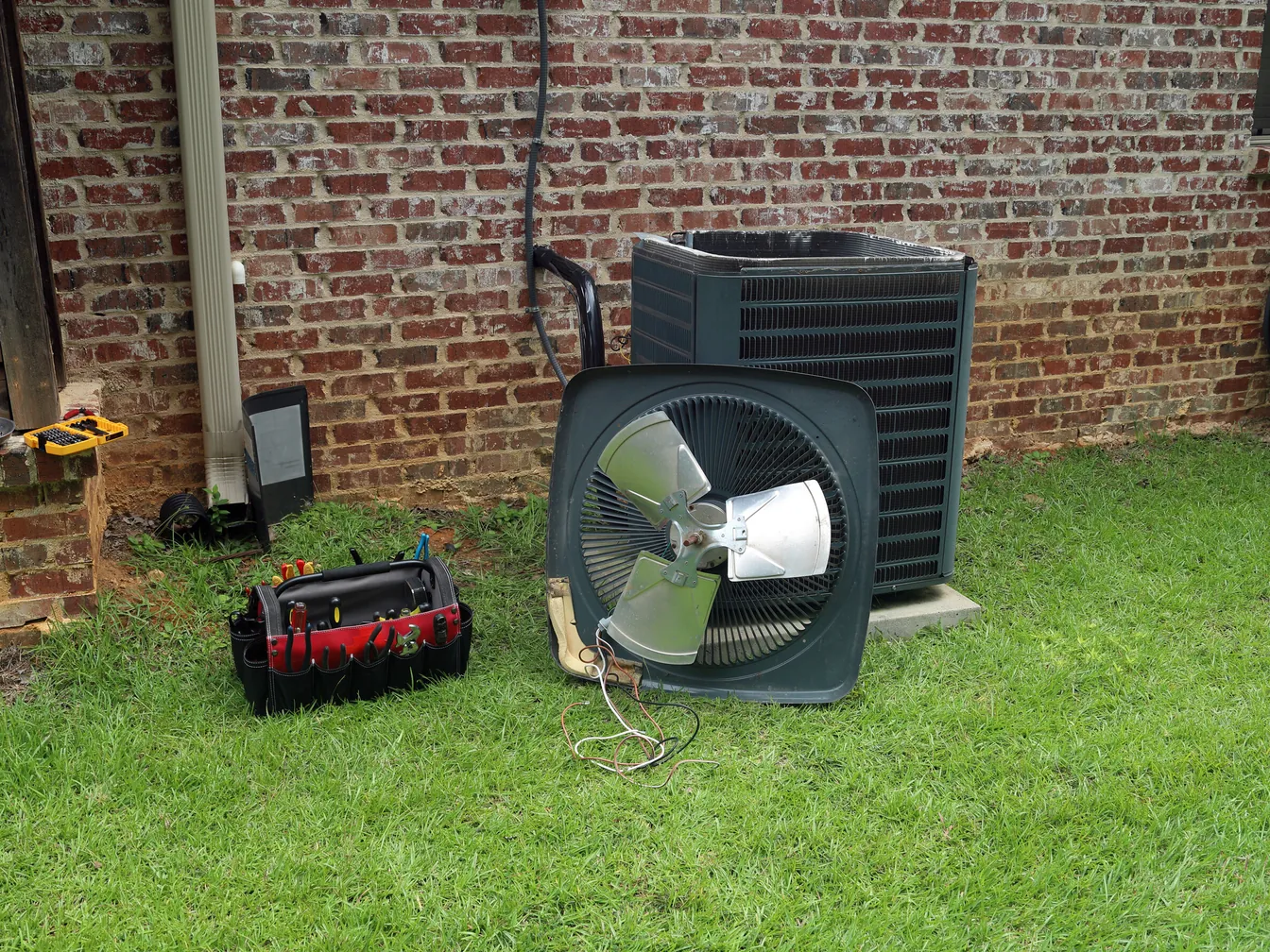
A family-owned company that answers for its diagnosis
GP Heating & Cooling is family-owned and locally-owned, so the reputation of our business rests on whether each diagnosis is honest and complete. When a system needs attention, we want you to understand the real cause before anyone replaces a part. You can read about who stands behind our work on the About Us page.
22 years of experience behind every repair call
GP Heating & Cooling was established in 2022, and the experience behind our work spans 22 years in heating and cooling. That background helps our technicians recognize the patterns that point to a specific failure, so the inspection moves toward the cause instead of trying one part after another.
Armstrong and Ducane dealer relationships
We are an Armstrong ProTeam Dealer and a Ducane Dealer, and those relationships help us understand the central air conditioning equipment we repair. Knowing how these systems are built and where they tend to wear lets us explain repair options clearly and recommend only the work your system needs.
Service Finance for larger decisions
Some repairs are part of a bigger decision about the age and condition of your system. Our team can explain how financing through Service Finance applies to your situation, so a larger repair or replacement can be planned in manageable monthly payments rather than rushed.
Scheduled care through our maintenance plan
Developing problems often show up first as small changes in performance. Our maintenance plan adds planned visits to your calendar, giving our team regular chances to catch wear before it leads to a breakdown. You can review the maintenance plan details before you decide.
Share the Symptoms
Tell Us What Your Central AC Is Doing
Tell us what your system is doing, when the problem started and what you have already tried, and our team will follow up with next steps. Share as much detail as you can, even if you are not sure what is causing the problem. You can send the details through our contact page. If you want to compare options, see our central AC installation services, review routine maintenance and tune-ups, or read the central air conditioning overview. We will explain what we find before any next step is decided.
Watch for These
Warning Signs Your Central AC Needs Attention
Symptoms rarely appear without a reason. The signs below point to specific areas of the system, and each one deserves a closer look before it becomes a larger problem.
Warm Air Coming From the Supply Vents
Air that feels warm at the registers, even when the thermostat is set low, can point to a cooling problem rather than a settings issue. The cause may be a refrigerant problem, a compressor that is not moving refrigerant efficiently or an outdoor unit that cannot release heat. Our team tests the system to find out which of these is responsible. Warm air that shows up in only some rooms calls for a closer look at airflow.
Weak Airflow in Certain Rooms
Rooms that never seem to cool, or registers that barely move air, often signal a restriction somewhere along the air path. Dirty filters, closed or blocked vents, a failing blower motor and leaky ducts that may need duct sealing can all reduce the volume of air reaching each room. Restricted airflow also makes the coil work harder and can lead to freezing. Measuring airflow helps us identify which component is responsible.
Short Cycling or Frequent Shutoffs
A system that starts, runs briefly and shuts off again is cycling too often. This pattern can mean the system is overheating, a safety control is tripping or a component is not starting the cycle correctly. Frequent starts also stress electrical components and can leave some rooms feeling uneven. We recommend a diagnostic visit rather than repeated resets.
Ice on the Refrigerant Lines or Indoor Unit
Frost or ice on the copper refrigerant lines, the indoor coil or the air handler cabinet shows that the system is not operating within its normal range. Ice blocks airflow over the coil, and water can overflow later as it melts. Continuing to run an iced system can damage components. Switch the system to fan-only mode until the ice melts, then contact our team to find the cause.
Water Around the Indoor Air Handler
Water pooling near the indoor unit, stains on a ceiling below the air handler or a musty smell from the drain area can all point to a condensate problem. A clogged drain line, a cracked drain pan or a unit that is not level can allow water to escape. Left alone, this can damage drywall, flooring and surrounding materials. Early attention keeps a small leak from turning into a larger repair.
Hissing Near the Refrigerant Lines
A hissing or bubbling sound near the refrigerant lines can signal that refrigerant is escaping through a small opening. Refrigerant loss reduces cooling and can leave the coil colder than it should be. The problem tends to grow rather than settle on its own. Hearing this sound is a good reason to schedule a diagnosis instead of waiting to see whether it stops.
Repair Process
From Diagnosis to Documented Repair
Each repair follows a clear sequence, from the first call through the written record we leave behind. Every step is focused on finding the cause before any part is replaced.
Step 1 of 5
Symptom Review and Scheduling
Our first step is understanding what your system is doing and when the problem appears. Those details help us prepare for the visit and focus the diagnosis from the start.
- Describe the symptoms you have noticed, including when they started and how often they occur.
- Share the age and model information for your system if you have it, along with any recent service records.
- Note any warnings you have seen, such as tripped breakers, unusual smells or water near the indoor unit.
- Ask about access to the indoor air handler and outdoor condenser so the visit can be planned.
- Request a visit through our contact page, and our team will confirm a time with you.
Step 2 of 5
On-Site Diagnostic Inspection
Our team inspects the system at the home to identify the source of the problem. We test the equipment rather than relying on the symptom alone, because the same symptom can come from several causes.
- Check airflow at the blower, the filter location, and the return and supply registers.
- Inspect the indoor coil, drain pan and condensate drain for restrictions or damage.
- Test electrical components such as capacitors, contactors and control wiring.
- Inspect the outdoor condenser, fan motor and coil for airflow restrictions.
- Measure operating readings that show how the system performs under load.
- Review ductwork connections wherever airflow loss is suspected.
Step 3 of 5
Clear Explanation of Repair Options
Once we know the cause, we explain it in plain language before recommending any work. You see the findings, the options and the reasons behind each recommendation, so the decision stays with you.
- Explain the cause of the problem and how it affects comfort or efficiency.
- Outline repair options, including what each one fixes and what it leaves for later.
- Identify when a repair is part of a larger decision about the condition of the system.
- Note where ductwork changes may require custom sheet metal fabrication for a precise fit.
- Discuss financing through Service Finance if a larger repair is part of the plan.
- Confirm your approval before any work begins.
Step 4 of 5
Repair Work and Performance Testing
We complete approved repairs carefully and test the system afterward. Testing confirms that the fix addresses the original symptom and that the rest of the system is operating as expected.
- Repair or replace the components identified during the diagnosis.
- Confirm that electrical connections are secure and that controls respond correctly.
- Restart the system and watch it through a full operating cycle.
- Verify airflow and cooling performance at several rooms across the home.
- Check the condensate drain to confirm that water is leaving the system as designed.
- Clean up the work area before we leave.
Step 5 of 5
Test Results and Written Repair Record
We finish with a written record of the work, so you know exactly what was found and what was fixed. The record stays with you for reference and for any future service visits.
- Provide a summary of the repair, the components replaced and the reason for each change.
- Share the test readings and performance observations recorded during the visit.
- Include warranty information for replaced parts where the manufacturer provides it.
- Recommend next steps, such as monitoring a symptom or scheduling routine care.
- Explain how to keep the system performing well between visits.
- Answer your questions before we leave the home.
Components We Repair
Central AC Components We Diagnose and Repair
Each component below plays a specific role in cooling your home, and each one can fail in its own way.
Indoor Evaporator Coil
The indoor coil absorbs heat from the air inside your home. When it is dirty, restricted or low on refrigerant, its performance drops. We clean, test and repair coil problems so heat transfer returns to normal.
Outdoor Condenser and Coil
The outdoor coil releases the heat collected from your home. Debris, bent fins or a weak fan can reduce that release and push the system to work harder. We inspect and clean the outdoor section, then test how it performs.
Compressor Diagnostics
The compressor circulates refrigerant through the system, so its condition shapes every cooling cycle. We test compressor operation and electrical readings before recommending any compressor work. We explain what the readings show so you understand the reasons behind the recommendation.
Capacitors and Contactors
Capacitors and contactors provide the electrical starts and switching that keep the outdoor components running. These parts wear over time, and a failing one can prevent the system from starting. We test them directly and replace only what the readings show needs attention.
Blower Motor and Air Handler
The blower moves conditioned air through the ductwork and into each room. A worn motor or a failing control can leave some rooms warm even when the rest of the house is comfortable. We check blower operation and airflow before deciding on a repair.
Refrigerant Lines and Connections
The refrigerant lines carry the working fluid between the indoor and outdoor sections. Loose fittings, worn insulation or damaged lines can reduce performance and allow refrigerant to escape. We inspect each connection and repair what is damaged.
Condensate Drain and Drain Pan
The condensate drain carries moisture away from the indoor coil. A clog or cracked pan can cause water damage if left unaddressed. We clear the drain, inspect the pan and confirm that the unit drains properly after service.
Thermostat and Control Wiring
The thermostat tells the system when to start, stop and how hard to run. Faulty wiring or a failing control can cause the system to act unpredictably. We check settings, wiring and control response so the equipment follows the commands it receives.
Repair Questions
Central AC Repair Questions Answered
A system can run normally and still fail to cool when air is not moving across the indoor coil properly or heat is not released at the outdoor unit. Dirty filters, weak blowers and leaky ducts are common culprits. If dust and humidity are also a concern, our indoor air quality services are worth a look. We test each area before recommending parts, so we focus on the actual cause.
A repair often makes sense when one component has failed, the rest of the system is in sound condition and the fix does not leave other parts due for trouble. When several major components are failing, or the system struggles even after service, replacement deserves a closer look. We weigh the equipment’s age, repair history and ductwork condition, then explain both paths so you can decide with facts in hand.
Ice on the indoor coil usually points to restricted airflow or a refrigerant problem. Dirty filters, blocked registers, a weak blower and low refrigerant can all cause the coil to freeze. If you see ice, switch the system to fan-only mode until it melts, check the filter, then contact us. Running an iced system can strain the compressor and cause water to overflow later.
Short cycling, where the system starts and stops repeatedly, often comes from overheating, a tripped safety control, a dirty outdoor coil or an airflow problem. Some causes are simple to correct, while others need component testing. Because repeated starts put strain on electrical parts, we recommend a diagnostic visit instead of repeated resets. Our team checks temperatures, electrical components and airflow to find the trigger.
A diagnostic visit begins with a conversation about the symptoms you have noticed and when they started. Our technicians then inspect the indoor and outdoor components, check airflow, test electrical readings and check refrigerant performance when the situation calls for it. We explain what we find in plain language and outline repair options. Nothing is repaired until you understand the findings.
Refrigerant leaks are found by testing the system and inspecting connections, coils and lines to locate the source. Once the leak is identified, repair depends on where it is and the condition of the surrounding components. Adding refrigerant without finding the leak does not solve the underlying problem. Our team explains what we find and the repair options before any work begins.
Grinding, rattling, squealing and buzzing from the outdoor unit each point to different parts. A worn fan motor, a loose panel, a failing bearing or debris in the fan path are common sources. Some of these noises signal damage that grows with continued running, so we recommend an inspection rather than waiting. Describing the sound when you contact us helps our team prepare.
Water near the indoor unit often means the condensate drain is clogged, the drain pan is cracked or the unit is not sloping correctly. Left alone, overflow can damage ceilings, flooring and nearby materials. Our team clears and inspects the drain system, checks the pan and looks for the cause of the overflow. Keeping the filter clean also helps reduce the buildup that blocks drains.
We share our findings in plain language and describe each option, including what it fixes and what it leaves for later. You have time to ask questions, compare choices and decide what fits your household and budget. We do not begin repair work until you understand the recommendation. If you want to talk through a recommendation first, reach out through our contact page.
Many central air problems trace back to how air moves through the home, so a repair visit often includes a look at the filter location, the return air path and the ductwork connections. If the rest of the system shows wear, we tell you so and explain what it means. For homes where a ducted heat pump is part of the system, the same inspection approach applies. Our team reviews each component before recommending work.
Service Coverage
Communities We Serve With Central AC Repair
Our repair team works from our New Bern office and serves these North Carolina communities. For a broader look at where we work, see our service area overview.
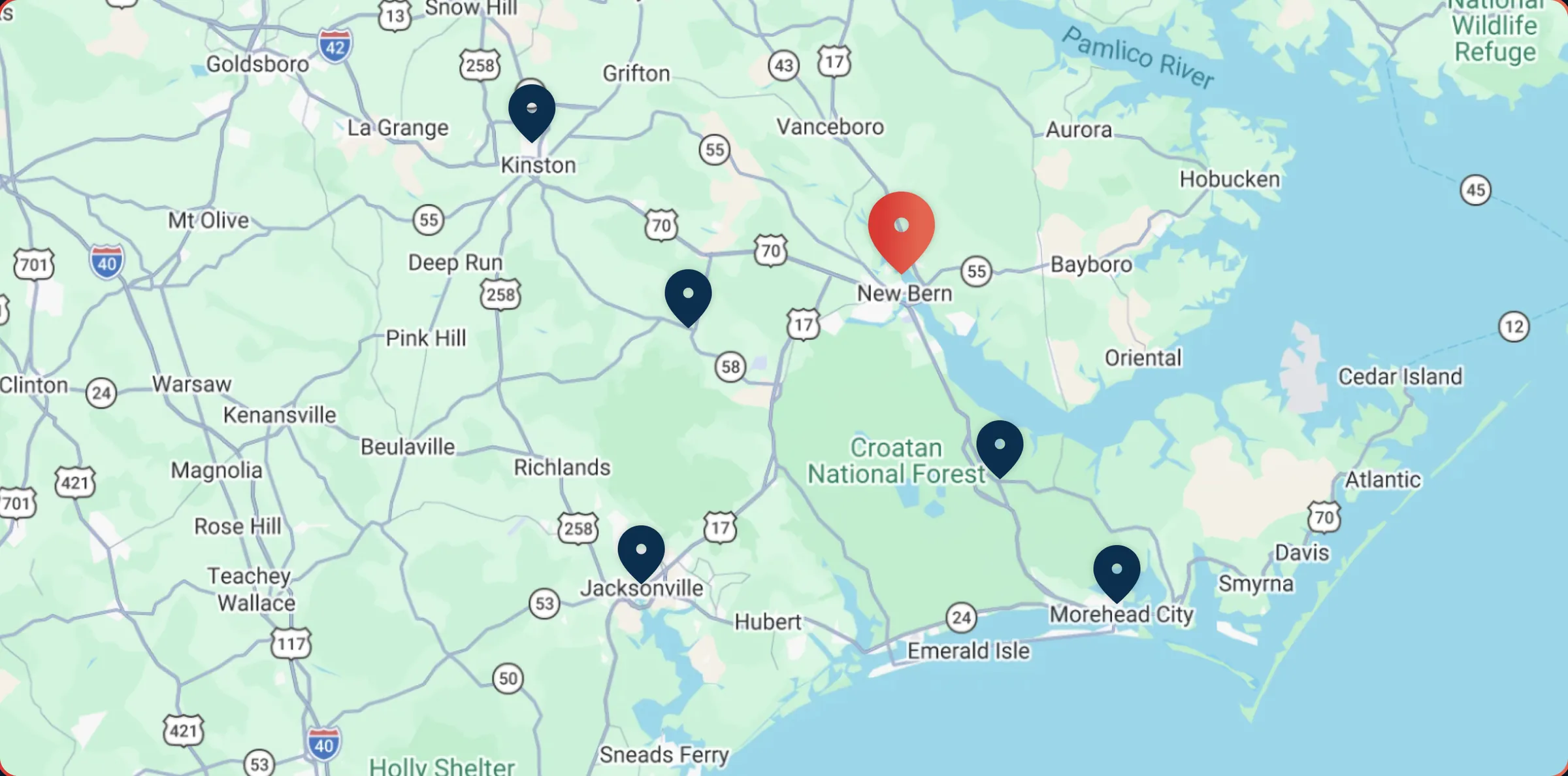
- New Bern, NC
- Morehead City, NC
- Jacksonville, NC
- Havelock, NC
- Trenton, NC
- Kinston, NC

Additional Communities Served
Don’t see your town listed? We regularly help customers in nearby communities throughout the region. Give us a call and we’ll let you know if we can reach you.
Also We Service
Other Systems We Repair and Maintain
Many homeowners with a central air system also rely on the equipment below, and we service each one with the same diagnostic approach.
Furnaces
Furnace repair and service for homes that depend on reliable heat through the colder months.
Learn More about FurnacesMini-split systems
Ductless repair and maintenance for individual rooms, additions and homes without ductwork.
Learn More about Mini-split systemsPackaged units
Repair and service for single-cabinet heating and cooling systems.
Learn More about Packaged unitsGeothermal repair and service
Diagnosis and repair for geothermal systems in the homes we serve.
Learn More about Geothermal repair and service
Ready to Diagnose
A Cooling Contractor Ready to Look at Your System
When your central air conditioner stops cooling the way it should, the most important step is understanding the cause. Our team takes the time to inspect the system, explain what we find and walk you through each repair option before any work begins. We would rather give you clear information than recommend a repair you do not need, and we aim to leave you with a written record you can refer to later.
If a repair points toward a larger decision, financing through Service Finance may help make the project easier to plan for. A maintenance plan can also keep the rest of your system on a regular schedule, so developing problems are more likely to be caught before they turn into repairs. Both options are explained in plain terms during your visit, so you can weigh them against your household’s needs.
Whether you are a homeowner in Havelock, Kinston or anywhere else in our service area, you can explore our full range of services to see how central AC repair fits with the rest of your home’s heating and cooling. When you are ready, reach out to describe what your system is doing. We will explain what we find and what we recommend, so you can decide with confidence.