
Ductless Repair and Service
Mini-Split Repair in New Bern, NC
GP Heating & Cooling is a family-owned and locally-owned company based in New Bern, NC. When a ductless system stops cooling, stops heating, drips water or leaves one room out of step with the rest of the house, our team begins with a careful diagnosis. We check the outdoor condenser, the indoor heads, the refrigerant circuit and the controls, then explain what we find in plain language. We are a Tosot Dealer for mini-split systems, we also work with Mitsubishi equipment, and our work reflects 22 years of experience in heating and cooling.
Why Choose Our Repair Team
Why New Bern Homes Trust a Heating and Cooling Contractor for Ductless Repairs
A ductless system has several parts that work together, so a repair call needs more than a quick swap. These six commitments guide every service visit we make.
Family ownership that takes every zone seriously
One outdoor unit can feed several indoor heads, and a fault in one room can affect comfort everywhere else. As a family-owned business, we want the cause identified in each zone before we recommend a part. You can meet the people behind the company on our About Us page.
Dealer knowledge across ductless lines
We are a Tosot Dealer for mini-split systems and we also work with Mitsubishi equipment. Our team is also an Armstrong ProTeam Dealer and a Ducane dealer, so our technicians work with a broad range of comfort equipment.
Diagnosis that starts with the whole system
Ductless faults can come from the outdoor condenser, the indoor head, the refrigerant lines or the control signal between them. We test each part in sequence, so a symptom felt at the wall is traced back to the component actually responsible.
22 years of experience behind every finding
Our team brings 22 years of experience in heating and cooling to each ductless repair. That background helps us recognize familiar failure patterns, from drain problems to icing, and separate them from faults that need closer testing.
Plain-language explanations before any work begins
We explain the cause, the repair options and what each option corrects before we start. You can ask questions, compare choices and decide at your own pace.
Financing and planned care for larger decisions
When a repair points toward a bigger change, Service Finance can help that project fit into manageable monthly payments. Our maintenance plan adds scheduled visits that give technicians regular chances to find wear early. Review our financing options before you decide.
Request a Diagnosis
Tell Us What Your Ductless System Is Doing
Describe which rooms are affected, whether the outdoor unit runs, what the indoor head does, and when the problem started. Note any water, ice, error codes or unusual sounds you have noticed. You can send those details through our contact page, and our team will follow up with next steps. If the equipment may need replacing instead, our mini-split installation options explain that path, and our mini-split maintenance and tune-ups cover planned care. The mini-split overview brings the full range of ductless service together.
Early Warning Signs
Early Warnings Your Ductless System Needs a Look
A ductless system rarely fails without giving some notice. Each sign below points to a different part of the system.
Water Dripping From an Indoor Head
Water on the floor, staining on the wall below an indoor unit, or drips from the front panel usually point to the condensate drain. A clogged line, a flat drain or a failed pump can cause it. Standing water can damage flooring and encourage mold, so the drain should be inspected rather than simply wiped up.
Ice Forming on the Outdoor Unit or Indoor Coil
A layer of frost on the outdoor condenser or a frozen indoor coil means the system is not moving heat the way it should. Restricted airflow, a dirty coil, a fan that is not turning or a refrigerant problem can all cause ice. We look for the cause before recommending any thaw or repair.
One Room That Never Reaches the Setting
When a single room stays warmer or cooler than its remote setting while other rooms are comfortable, the cause may be a dirty filter, a weak fan speed, a blocked indoor head or a control problem. Sometimes the issue lies in the room itself, such as heavy sun exposure or a door left open. We check each head to separate room factors from equipment faults.
Short Cycling or Repeated Starts and Stops
A ductless unit that turns on, runs briefly and shuts down again may be reacting to a safety control, an overheating outdoor unit, a faulty sensor reading or a refrigerant imbalance. Frequent cycling wears the compressor and leaves rooms unevenly conditioned. We trace the reason the system stops rather than simply restarting it.
Error Codes or a Remote That Stops Responding
Flashing lights, numeric codes on an indoor display or a remote that no longer reaches the indoor head can all signal a fault. Some codes point to a sensor problem, while others mark a protective shutdown. Our technicians read the code, check the wiring and control signal, and confirm the result before replacing any board.
Unusual Noises From the Outdoor Unit
Rattling, grinding, buzzing or a loud hum from the outdoor condenser is not normal operation. The source may be a loose fan blade, a worn motor bearing, a failing capacitor or a compressor that struggles to start. Each sound has a different cause, so we listen during the visit and locate the source before any part is replaced.
The Repair Sequence
How Our Ductless Repair Visit Unfolds
Every repair follows the same order, so you know what happens at each stage. We want the cause identified and explained before anything is replaced.
Step 1 of 5
Review the Symptoms Room by Room
We start by learning how each room has behaved, since the pattern of problems often shows which part of the system is involved.
- Describe which indoor heads are affected and whether the problem appears in cooling, heating or both.
- Note when the problem started and whether it happens at certain times of day or in certain weather.
- Share any error codes, remote behavior or sounds you have noticed.
- Tell us about recent service, filter changes or work performed by another company.
- Request a visit through our contact page, and our team will confirm a time with you.
Step 2 of 5
Inspect the Outdoor Condenser and Refrigerant Circuit
The outdoor unit houses the compressor, the condenser coil and the fan that moves air across it. Each part has to work in order for the system to move heat.
- Check the fan, motor and mounting for wear, vibration or obstruction.
- Inspect the condenser coil for dirt, bent fins and debris that restrict airflow.
- Test the compressor, capacitor and electrical connections at the outdoor unit.
- Examine the refrigerant line set for damaged insulation, kinks and oily residue at joints.
- Compare operating readings with what the system should show in the mode it is running.
Step 3 of 5
Check the Indoor Heads, Drains and Filters
Indoor heads deliver the conditioned air, and each one has its own fan, coil, filter and drain. A problem in one head can look like a problem in the whole system.
- Inspect the filter and indoor coil for dust, buildup or restriction.
- Test the indoor blower speed and confirm the fan responds to each command.
- Check the condensate pan, drain line and any pump, looking for slope problems and clogs.
- Look for ice on the coil, damaged louvers or obstructions near the air outlet.
- Compare temperatures between rooms to see whether one head is underperforming.
Step 4 of 5
Test Controls, Sensors and the Electrical Supply
A ductless system relies on sensors and a control signal to decide when to run. Faults in those parts can mimic a failed compressor, so we test them before drawing conclusions.
- Confirm that the remote or wall controller sends commands to each indoor head.
- Test the temperature sensors on the indoor and outdoor units for accurate readings.
- Inspect the communication cable between units for damage, loose connections or corrosion.
- Check the control board for error history and abnormal responses during startup.
- Verify that the electrical supply and disconnect match the equipment requirements.
Step 5 of 5
Explain the Cause, Retest and Document the Repair
We complete only the approved work, then test the system through full operating cycles before we leave. The final step gives you the test results and the paperwork you need for future reference.
- Explain the component responsible, the repair options and what each option will and will not correct.
- Replace or repair only the parts identified during the diagnosis, and confirm the new part responds correctly.
- Run each indoor head through cooling and heating modes, checking airflow, temperatures and drainage in every room.
- Record the test readings from the visit, including sensor and operating observations.
- Provide manufacturer warranty information for any replacement part, and answer your questions before we leave.
Parts We Diagnose
Ductless Components We Test and Repair
Each component below has a specific job in moving heat between the outdoor unit and your rooms, and each can fail in its own way.
Outdoor Condenser Fan and Motor
The fan carries heat away from the condenser coil. We check the blade, motor and mounting, then confirm the fan responds to commands.
Compressor and Run Capacitor
A weak capacitor or electrical fault can keep the compressor from starting properly, so we test both before considering the compressor itself.
Refrigerant Lines and Leak Checks
A system that has lost refrigerant has a leak somewhere along the circuit, so adding refrigerant alone does not fix the cause. We inspect the line set and its connections.
Indoor Blower and Filter
We test blower speed, clear or replace the filter where needed, and confirm each head answers its controller.
Condensate Drain and Pump
We check the slope, the drain path and any pump, then confirm that water flows correctly from each indoor head.
Control Board, Sensors and Remote
Faulty sensor readings can make a healthy system run incorrectly, so we verify sensors and controls before replacing a board.
Wall Penetration and Line Set Insulation
The wall opening must stay sealed against water and air. Damaged insulation can cause condensation, drafts and lost efficiency.
Electrical Connections and Wiring
Loose connections and worn wiring can cause intermittent faults that are hard to trace. We check terminals, disconnects and the supply path, and explain any electrical work before it begins.
Common Questions
Mini-Split Repair Questions Answered
A room that drifts out of step with the rest of the house often has a local cause, such as a dirty filter, a blocked indoor head, heavy sun through a window or a fan running at low speed. Some cases point to a control or sensor issue. We test each indoor head separately, compare its readings with the others and separate a room-level factor from an equipment fault before recommending a repair.
Dripping usually means condensate is not reaching the drain. The cause may be a clog in the drain line, a drain that has lost its downhill slope, a failed pump or insulation that is sweating. Water left on the floor can damage finishes, so the leak should be inspected rather than wiped up and forgotten. We check the drain path, the pan and the line insulation, then explain what needs correction.
Ice means the coil is running colder than it should, or that airflow across it has dropped. Common causes include a dirty coil, a fan that is not turning at full speed, a clogged filter or an indoor head that moves too little air. Refrigerant problems can also cause icing. Because running the system while iced over can strain the compressor, we look for the source before recommending a thaw or a repair.
A unit that runs continuously without reaching its setpoint is not moving enough heat. That can come from low refrigerant, a restricted coil, a weak compressor or an outdoor unit that cannot release heat effectively. Room conditions and sizing matter too. We compare the operating readings with expected performance, then identify whether the shortfall comes from the equipment, the airflow or the building itself.
Error codes are the system’s way of reporting a fault. Each code points to a category, such as a sensor, communication, fan or protection issue, and the exact meaning depends on the manufacturer and model. Our technicians read the code, check the wiring and sensors it references, and confirm the result with a test before replacing any part. Note the code and the room where it appears when you contact us.
Yes. A clogged filter restricts airflow across the indoor coil, which can drop the coil temperature below freezing and form ice. Once ice builds up, airflow falls further and the problem can worsen. Clearing the filter is a simple first check, but icing can also come from a fan fault, low refrigerant or a control issue, so we inspect the whole indoor head before deciding the cause.
No. Refrigerant stays inside a sealed circuit, so a system that has lost charge has a leak somewhere in the lines, fittings or coils. We look for the source, repair it where possible and then verify operation. Replacement is one of several options, and we discuss it only when the age, condition or repair history of the system points that way, leaving the final decision with you.
We work through the system in sections. Readings from the outdoor unit are compared with what the indoor head reports, sensors are tested on both sides, and the control signal between them is checked. When a component performs as expected in testing, we move on to the next suspect. This method keeps us from replacing a part that was working and gives you a clear explanation of which unit is responsible.
Our repair visit ends with a summary of the cause, the work performed, the parts replaced and the test readings we recorded. Manufacturer warranty information for any replacement part is included when it applies, so you have a reference for future service. Keep the paperwork with your home records, and ask us about anything that is unclear before we leave.
Often yes, when the problem is isolated and the rest of the system is sound. A failed sensor, fan motor or capacitor is typically a repairable item. Repeated failures, widespread wear or a system that struggles across several rooms may make a larger decision worth discussing. We review the repair history with you and explain the options, so you can weigh them on the facts before choosing a path.
Service Communities
Ductless Repair Service Across Our Communities
Our ductless repair team works from our New Bern office and serves these North Carolina communities. For a broader look at our coverage, see our service area overview.
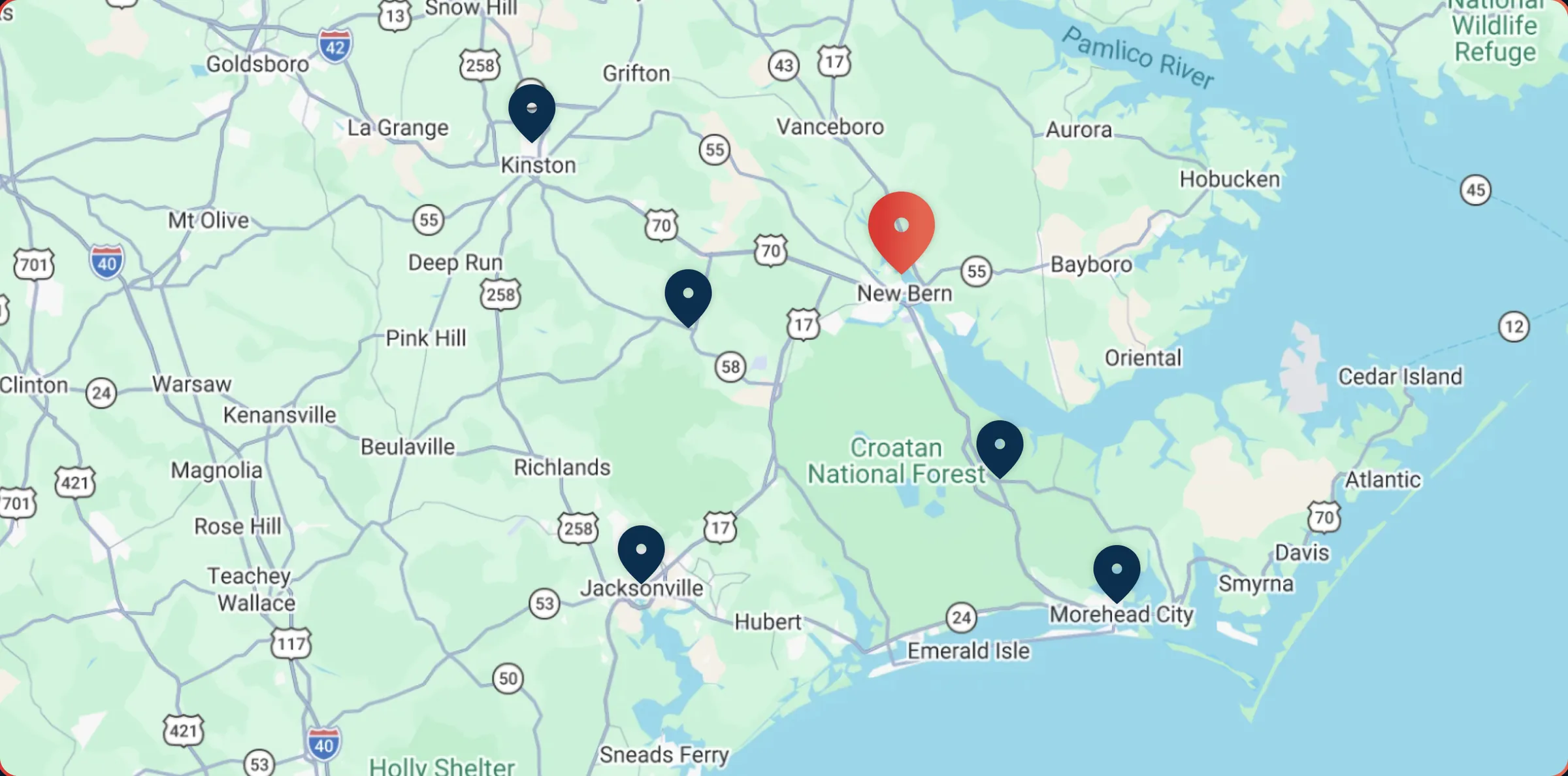
- New Bern, NC
- Morehead City, NC
- Jacksonville, NC
- Havelock, NC
- Trenton, NC
- Kinston, NC

Additional Communities Served
Don’t see your town listed? We regularly help customers in nearby communities throughout the region. Give us a call and we’ll let you know if we can reach you.
Nearby Comfort Services
Comfort Systems Worth a Second Look
A ductless fault sometimes sits alongside other equipment in the home, so these related repair services are worth knowing about.
Central air conditioning repair
Repair for central AC systems in homes that also have ductless zones.
Learn More about Central air conditioning repairDucted heat pump repair
Heating and cooling repair for homes weighing ductwork against ductless comfort.
Learn More about Ducted heat pump repairFurnace repair
Ignition, airflow and safety control diagnosis for homes that pair a furnace with a ductless zone.
Learn More about Furnace repairPackage unit repair
Repair for single-cabinet heating and cooling systems.
Learn More about Package unit repairIndoor air quality
Filtration, UV lights, humidifiers and duct sealing that complement a ductless system.
Learn More about Indoor air quality
A ductless repair goes best when we know which rooms are affected, what the system is doing and how the problem has changed over time. Our team reviews those details, checks the outdoor unit, the indoor heads and the controls, and walks you through the reasoning behind every recommendation. Those details also help us separate a fault limited to one room from one that affects the whole system. The goal is a repair that fits the actual fault rather than a guess, and you will know why each step is needed before it happens.
If the diagnosis points toward a larger change, Service Finance is one way to plan that project over time, and approval and terms are set by the lender. Our maintenance plan adds scheduled visits so wear is checked on a regular basis, which gives small faults a better chance of being caught before they grow into a no-cooling or no-heating call. Both options are explained in plain terms during your visit, and you can weigh them at your own pace. Nothing about the next step should feel rushed, and we will answer every question before any approved work begins.
Whether you live in New Bern or in one of the communities we serve nearby, you can explore our full range of services to see how ductless repair fits alongside the rest of your heating and cooling. When you are ready, describe what your system is doing and reach out to our team. We will explain what we find and what we recommend, so you can decide with clear expectations at every stage.