Commercial Gas Piping
Commercial Gas Line Services in New Bern, NC
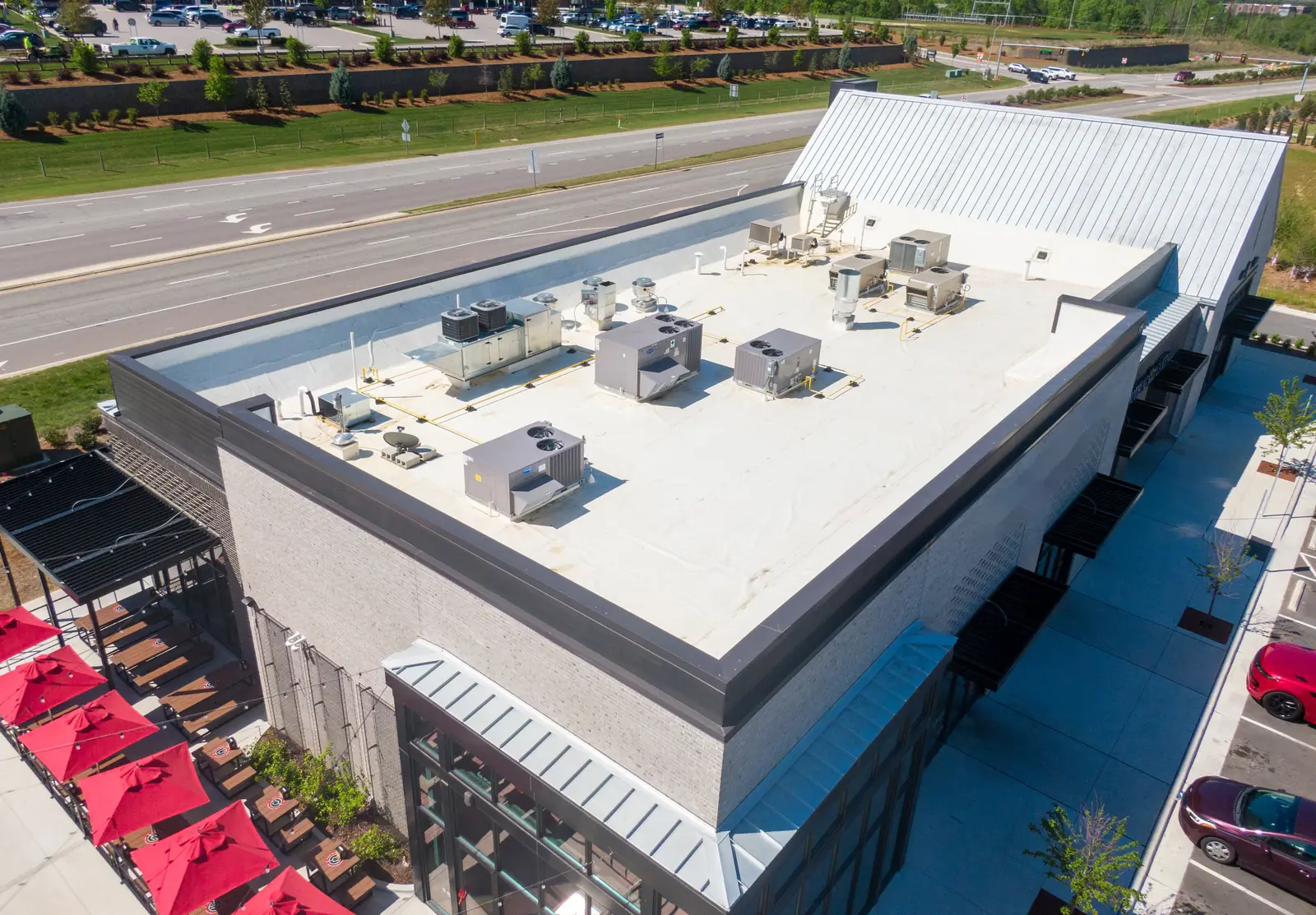
GP Heating & Cooling is a family-owned and locally-owned company based in New Bern, NC. Our commercial team reviews and services the gas piping that feeds heating and cooling equipment at businesses, from supply lines and shutoff valves through the connections at each appliance. Gas work leaves little room for guesswork, so every visit begins with the piping already in place and ends with a written record of what we tested. Backed by 22 years of experience, we explain each finding in plain language before any work is approved.
Our Gas Line Commitments
Why New Bern Businesses Rely on Our Gas Line Company
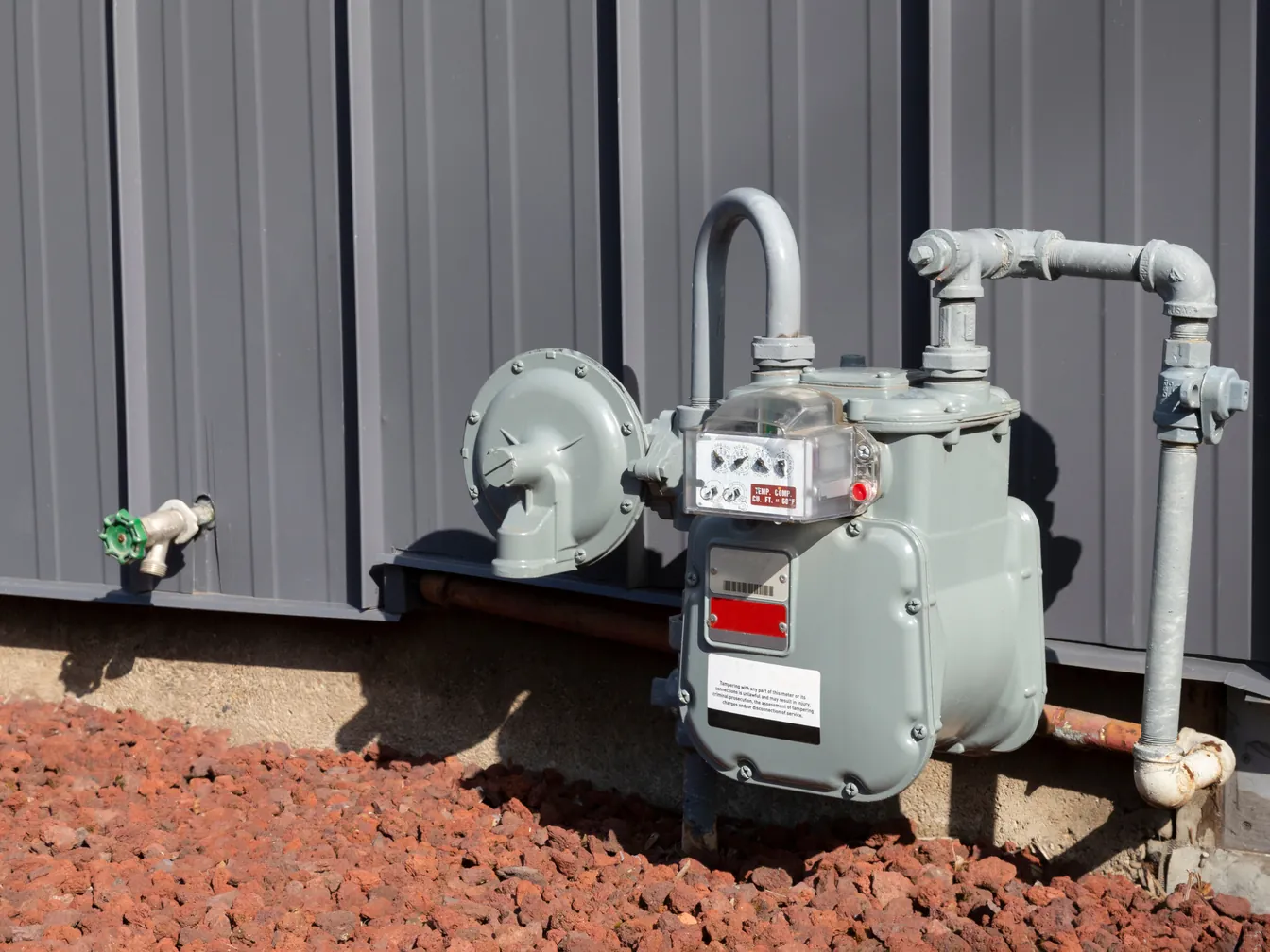
Gas piping delivers the fuel that heating and cooling equipment depends on, and a small fault in a supply line can shut down equipment across an entire building. These commitments shape how we handle every commercial gas job.
Family ownership with gas work on the line
Our company is family-owned, and the people who schedule your gas line review are the same people who answer for the work. Fuel piping leaves little room for shortcuts, and that accountability keeps our team careful at every fitting. You can read about our background on our About Us page.
Pressure and leak checks at each accessible joint
We test the lines and fittings we can reach before changing anything, so the findings reflect the piping as it actually stands. Each joint we check is recorded, which lets facilities staff see exactly what was tested and what passed.
Connections checked against the equipment they feed
A supply line is only as good as the appliance connection at its end. We compare line size and connection points with the equipment each line serves, so a boiler, rooftop unit or other appliance receives the fuel flow its controls expect.
Plain-language notes for owners and managers
Each visit closes with notes that describe what we tested, what we found and which items are required versus recommended. Owners, managers and outside engineers can review the same record without needing to decode technical shorthand.
Work timed around how your business runs
Gas work sometimes requires a temporary shutoff to part of the property. We agree on timing, access and tenant notice before we begin, and we confirm when gas service will return so daily operations are disrupted as little as possible.
Neighbors first on every commercial account
We sponsor a local Christian school and a Sunday School recreation league, and the businesses we serve in New Bern and nearby communities are our neighbors. They receive the same candid assessment we give family homes.
Tell Us About Your Gas Line
Describe the Gas Line Work Your Property Needs
Send us the equipment the gas piping feeds, where the lines run, and any changes you have noticed, such as a burner that seems short of fuel or a fitting that looks stained. Use our contact page to share those details, and our technicians will come to your property to review the lines where they sit. Businesses that also run other equipment can review our rooftop unit repair and maintenance page, our boiler service and repair page and our chiller service and repair page.
Equipment That Runs Weakly or Cycles Off
A burner or appliance that fires weakly, cycles off unexpectedly or struggles to reach its normal output can be receiving too little fuel. The cause may be a restricted line, a worn regulator or a connection that has loosened over time. We measure supply pressure at the appliance and compare it with the equipment’s requirements before changing anything.
Staining or Residue Around Gas Fittings
Dark staining, soot or residue near a gas connection can point to incomplete combustion, a loose fitting or a leak that has been slowly working at a joint. Visible residue is worth recording and reporting, even when the equipment still runs. We inspect each fitting in the area, note its condition and test it for leakage where we can reach it.
Pressure Drops When Multiple Appliances Run
When one appliance keeps working while another loses output as soon as a second unit starts, the supply line may be undersized for the combined demand or restricted between branches. Load-related drops often point to piping that was sized for an earlier arrangement of equipment. We compare demand with the line size and identify the restriction before recommending any change.
Corrosion or Damage on Exposed Piping
Rust, flaking coatings or dents on exposed gas piping weaken the metal and can hide small leaks behind insulation or supports. Damage often shows first where condensation, weather or foot traffic reaches the pipe. We check exposed runs, note the locations that need attention and recommend repair before the damage spreads.
Changes to the Building Without a Piping Record
Renovations, added equipment and relocated units can leave gas lines routed in places nobody has recorded. An unrecorded branch is hard to trace during troubleshooting and easy to overlook in planning. We trace the lines we can access and document what we find so future work begins from an accurate picture.
How We Review Your Gas Piping
How a Gas Line Visit Unfolds From Meter to Appliance
Each visit moves in a fixed order, starting with the piping layout and ending with written findings. Piping is checked before equipment is adjusted, and facilities staff receive a record of every test we perform.
Step 1 of 5
Review the Piping Layout With Your Staff
We begin with what your team knows about the lines before we open any access panels.
- Ask which equipment each gas line feeds and where the lines run through the property.
- Collect drawings, past service notes and any record of recent piping changes.
- Note the appliances that show weak output, cycling problems or unusual behavior.
- Agree on the areas and equipment that will lose gas during testing, and the timing of any shutoff.
- Confirm who on site approves the work and who receives the written findings.
Step 2 of 5
Inspect Piping, Supports and Shutoff Valves
The physical condition of the system tells us a great deal about how it will perform.
- Trace each accessible line from its shutoff valve to the appliance it serves.
- Check pipe supports, clamps and routing for sagging, vibration or contact with other components.
- Look for corrosion, damage and coating breakdown on exposed piping.
- Confirm that each shutoff valve operates smoothly and is clearly identified where it serves equipment.
- Note any line that has been modified, shortened or rerouted without a record.
Step 3 of 5
Test Connections and Joints for Leakage
Leaks come first in our checks, because a leak can hide behind fittings and insulation.
- Test each accessible joint and appliance connection for leakage using approved methods.
- Pay close attention to threaded fittings, flexible connectors and joints near vibration.
- Record each location we test, and mark any joint that needs repair before the system returns to service.
- Retest after any repair so the finding reflects the corrected condition.
- Document the results beside each location so staff can trace the work later.
Step 4 of 5
Measure Supply Pressure and Flow at the Appliance
Connected equipment needs fuel at the pressure and flow its controls expect.
- Measure supply pressure at the appliance and compare it with the equipment requirements.
- Check regulator operation and confirm it holds pressure under load.
- Compare line size with the demand of the appliances it feeds.
- Identify restrictions between branches that cause pressure drops during peak operation.
- Confirm normal ignition and operation once the readings are complete.
Step 5 of 5
Deliver the Written Findings and Planned Inspection Options
The visit closes with a written record that lets managers approve work with confidence.
- List each test performed, with readings and results recorded beside it.
- Separate required repairs from recommended improvements, with the reason for each.
- Note the fittings, valves and sections we repaired or replaced, so later technicians can trace the work.
- Recommend an inspection interval and the readings to watch between visits.
- Explain how planned inspections under our maintenance plans keep gas piping on a set calendar.
Common Gas Line Work
Gas Piping Components We Repair and Service
Supply Lines and Flexible Connectors
Worn or cracked supply lines and flexible connectors can leak or restrict fuel flow to equipment. We test each connector, replace any section that no longer holds, and confirm the connection is sound before the appliance returns to service.
Gas Valves and Regulators
Shutoff valves that stick and regulators that drift can starve equipment or create unsafe pressure. We check valve operation, test regulator output and repair or replace the components that no longer function as designed.
Threaded and Welded Joints
Joints that loosen with vibration or age are a common source of leakage in gas piping. We identify the joint, test it and correct the connection so it holds under normal operation.
Pipe Supports and Routing Corrections
Unsupported runs can sag, stress fittings and wear against structures over time. We reposition supports and correct routing where piping rubs or hangs, so the lines hold their position.
Appliance Connections
The connection at each appliance determines whether it receives fuel correctly. We check the connection’s size, condition and fit, then correct any issue that affects flow or sealing.
Leak Repairs at Fittings
Once a leak is located, the affected fitting or section must be repaired and retested before the line is considered sound. We repair the source, retest the joint and record the results so the work is documented.
Piping Changes After Equipment Work
When equipment is added, moved or replaced, the gas piping often needs review to confirm it still matches the new demand. We check the affected branches, correct sizing or routing issues and document the changes for future work.
Common Gas Line Questions
Questions Business Owners Ask About Gas Lines
Our commercial gas line services cover the piping that feeds heating and cooling equipment at businesses. That includes supply lines, shutoff valves, appliance connections and the joints between them. We test and repair these components, correct supports and routing, and review piping after equipment changes. Each job starts with a written review of the lines in place, so the scope reflects what the property actually needs.
Yes. We agree on timing, access and tenant notice before any work begins, and we plan testing so it fits the way your property operates. When a task requires a temporary shutoff to part of the building, we confirm the shutdown window in writing and tell you when gas service will return. Scheduling details depend on the property and the equipment involved, so describe your operating pattern when you contact us.
Leave the area, avoid operating electrical switches or ignition devices, and keep others away from the space. Call your gas utility or 911 from a safe location outside the building. Once the proper authorities have declared the area safe, contact our team so we can review the lines and equipment involved. Staff should never attempt to locate a leak themselves.
We begin by tracing each accessible line from its shutoff valve to the appliance it serves. Joints and appliance connections are tested for leakage using approved methods, with each location recorded in the written findings. Any joint that fails is marked for repair and retested after the work is complete. We explain the results before recommending any change, so you can see exactly which connections were checked and which needed correction.
Helpful details include the equipment each line feeds, the age and layout of the piping if you know it, and any record of recent renovations or equipment changes. Describe what you have noticed, such as weak output, cycling problems, staining near fittings or a change in how the equipment performs. Sharing these details in advance lets technicians bring the right test tools and focus the visit on the lines most likely to need attention.
Equipment needs fuel at the pressure and flow its controls expect. When a line is restricted, undersized or leaking, a burner can lose output, cycle off unexpectedly or run with incomplete combustion. Those symptoms often look like equipment faults, which is why we review the supply before adjusting controls or components. Correcting the fuel supply first keeps technicians from chasing problems that the equipment did not cause.
Yes. Our commercial gas line work includes the supply lines that feed boilers, rooftop units and other heating equipment at businesses. We review the piping, connections and valves that serve each appliance, then explain which items need attention. If your building has other equipment that relies on gas, describe it when you contact us so we can confirm the scope before the visit.
The right interval depends on the age of the piping, the equipment it feeds, how the building is used and any changes made since the last review. We recommend an inspection schedule in the written findings, along with the readings to watch between visits. Planned inspections under our maintenance plan keep the lines on a set calendar, so problems are caught before they affect equipment output.
We provide upfront quotes that list each repair, the reason for it and the items that can wait. Required work is separated from recommended improvements, so you can approve the scope that matches your budget and priorities. Service Finance is available for qualifying projects, so a larger repair can be spread over monthly payments, and we explain how that works before any work is approved.
Yes. Our commercial team serves businesses in Havelock, Morehead City, Trenton, Jacksonville and Kinston from our New Bern office, and every property receives the same review sequence regardless of location. If your building sits outside these communities, reach out through our contact page and we will confirm whether we can serve the property before you schedule a visit.
Where We Work
Gas Line Service Across Our Five Communities
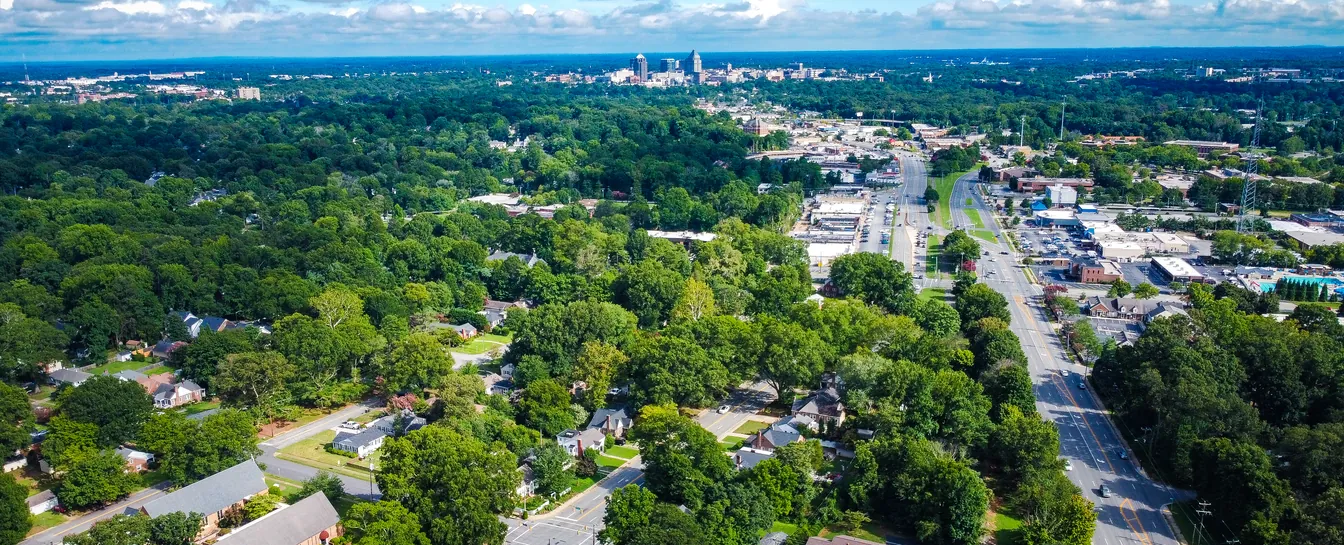
Commercial gas line visits reach these North Carolina communities from our New Bern office. For a broader view of our coverage, see our service area overview.
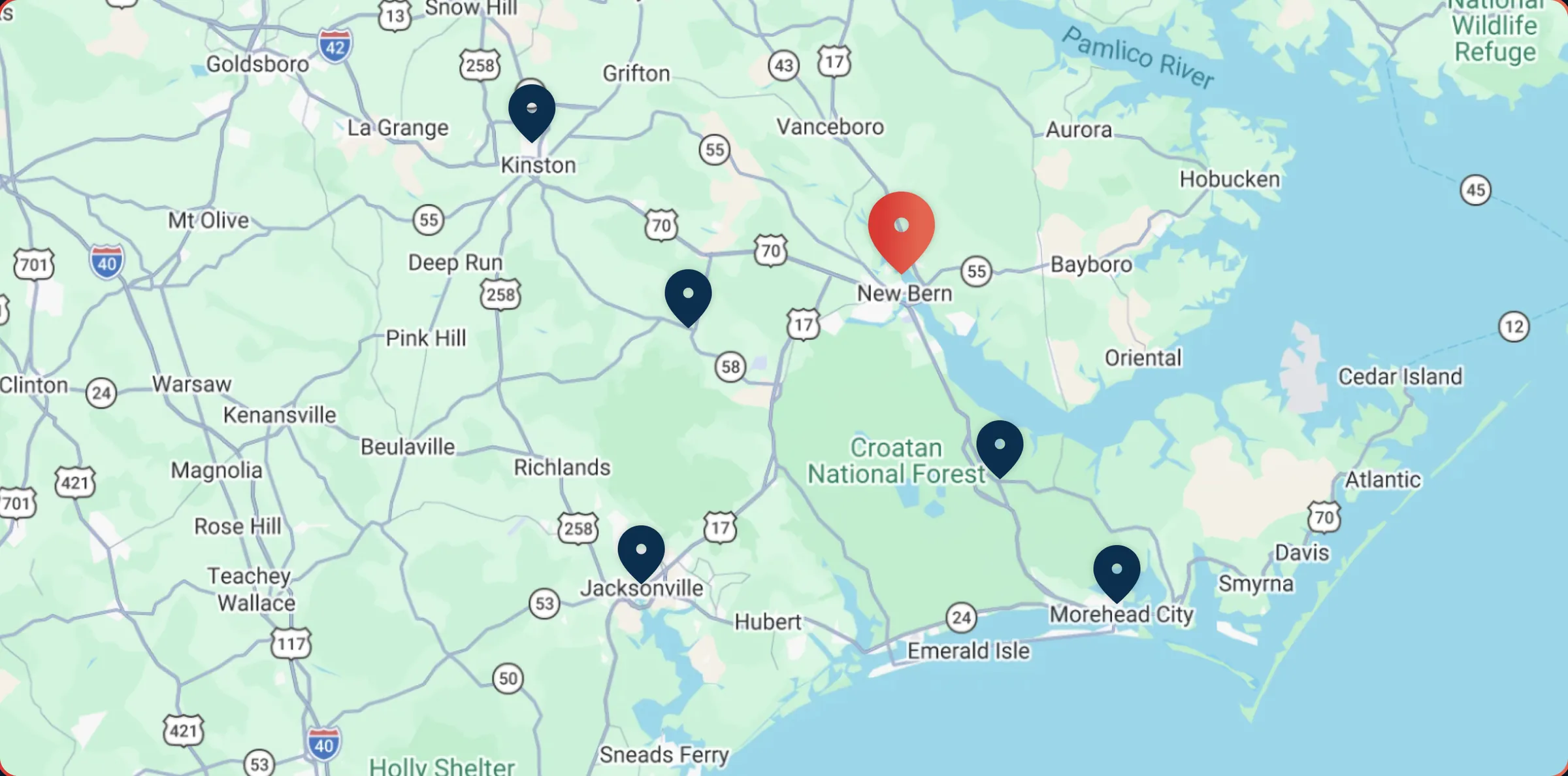
- New Bern, NC
- Morehead City, NC
- Jacksonville, NC
- Havelock, NC
- Trenton, NC
- Kinston, NC
Additional Communities Served
Don’t see your town listed? We regularly help customers in nearby communities throughout the region. Give us a call and we’ll let you know if we can reach you.
Keep the Whole Building Running
Related Equipment Care for Businesses
Gas piping, rooftop equipment and indoor air systems often share mechanical space and controls, so these related services may be worth comparing.
Commercial HVAC overview
Rooftop units, boilers, chillers and gas line service for businesses in one place.
Learn More about Commercial HVAC overviewRooftop unit installation
Commercial rooftop installation, with the gas and electrical connections coordinated with the project.
Learn More about Rooftop unit installationResidential gas line services
Gas line work for homes, from supply lines to appliance connections.
Learn More about Residential gas line servicesIndoor air quality solutions
Filtration, UV lighting and humidity control for occupied spaces.
Learn More about Indoor air quality solutionsCustom sheet metal fabrication
Custom-fitted sheet metal for repairs and installations that need a precise fit.
Learn More about Custom sheet metal fabrication
Talk with Our Team
Your New Bern Commercial Gas Contractor
Gas piping stays out of sight until it is not, and a supply line that restricts fuel or seeps at a joint can cost a business its heat or cooling. Tell us which equipment the lines feed, where you have noticed a change and what your staff has observed, and our team will review the piping on site. A decision about gas work should rest on measured data, so we explain the readings behind each recommendation and separate required items from improvements that can wait.
Service Finance is available for qualifying projects, so a larger gas line repair can be planned around monthly payments rather than absorbed as one expense. Our financing page explains how the program fits a commercial budget. Between visits, planned inspections keep piping on a predictable schedule, and our commercial maintenance plan is built for that purpose. Ask about the plan when you call, and we will explain how it applies to your property.
Whether your building sits in New Bern or in one of the five communities we serve, our crews work with building managers, owners and maintenance staff so the findings reach the people who approve the work. You can also review our full range of services to see how gas line work fits alongside heating, cooling and indoor air quality. When you are ready, reach out and we will explain what we find before recommending anything.