
Duct Sealing and Airflow
Duct Sealing in New Bern, NC
GP Heating & Cooling is a family-owned and locally-owned company based in New Bern, NC. We seal the leaks in supply and return ducts that send conditioned air into attics, crawl spaces and wall cavities instead of the rooms it was meant to heat or cool. Our technicians inspect your duct system first, then recommend sealing only where the findings support it. Backed by 22 years of experience, our team explains each finding in plain language, and you decide what moves forward.
Why Choose Us
Why Our Duct Sealing Contractor Starts With the Airflow Path
Sealing works only when the whole duct system is understood, so each project follows these commitments:
Family ownership applied to hidden work
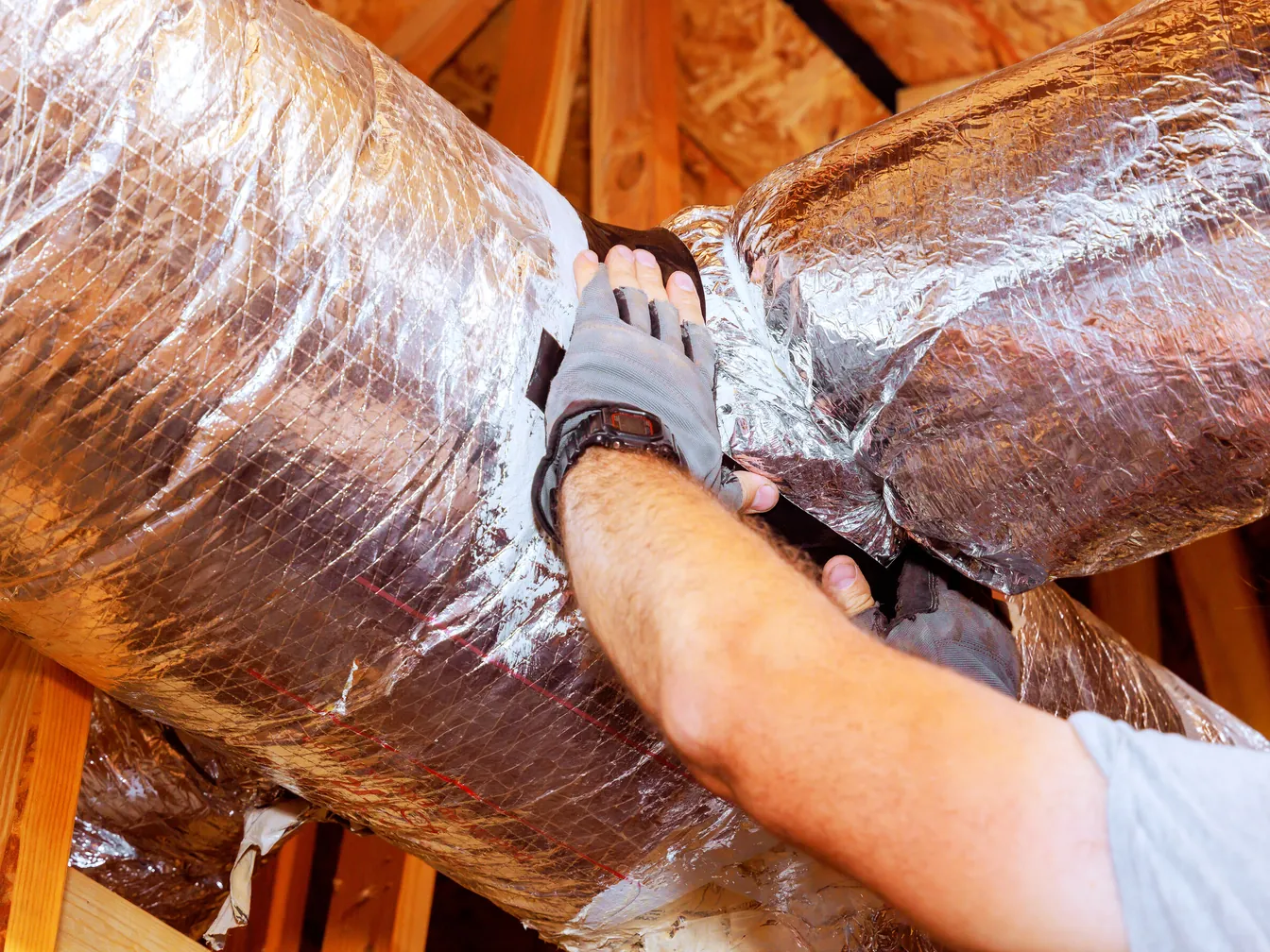
As a family-owned and locally-owned business, we know most ductwork sits out of sight in attics, crawl spaces and soffits. We give that hidden work the same care we give a finished living room. Meet our team on our About Us page to learn who will be inspecting your home.
Leak testing before any sealing
We measure where air escapes before we recommend a single seal. A visual check alone can miss leaks at joints behind insulation or inside duct boots, so we confirm findings with measurements you can review. Readings taken across several rooms tell a clearer story than a single spot check, and you see the results before any work is approved.
Sealing matched to your equipment
Ductwork connects to a furnace, heat pump, central air conditioner or packaged unit, and each system moves air differently. We confirm which equipment your ducts serve so sealing supports that system rather than working against it. That match is part of the written plan we review with you.
Dealer experience with Armstrong and Ducane systems
We are an Armstrong ProTeam Dealer and a Ducane dealer. Working with those lines keeps our technicians familiar with the duct connections and airflow patterns those systems rely on. Their duct requirements shape how we seal every connection, and we explain each one in terms you can follow.
Clear limits on what sealing can fix
Sealing reduces leakage, but it will not correct undersized equipment, a poorly designed layout or a failing blower. We explain those limits up front, so your expectations match what the work can deliver. If sealing is not the right answer for your home, we will say so.
Service Finance and planned care
Qualifying duct and comfort projects can be spread out through Service Finance, and our maintenance plan keeps connected equipment on a regular schedule. Ask us about the financing options available for your project. Review our financing options or our maintenance plan details when you plan your next step.
Start the Conversation
Tell Us Where Your Ducts Lose Air
Share which rooms feel uneven, where you notice dust collecting around registers, and whether you hear air moving behind walls or through the attic. Note the heating and cooling equipment you use and whether the home has added rooms or ductwork over the years. If you have photos of visible duct damage, include them with your message. You can send these details through our contact page, and our team will follow up with next steps. If your comfort concerns extend beyond the ducts, compare air filtration and air cleaners, UV light options or humidifiers and dehumidifiers. Our technicians assess your home first, and no work begins without your approval.
Step By Step
How a Duct Sealing Project Moves From Inspection to Results
Sealing works best when leaks are located before anything is closed up. Each step below ends with findings you can review, and the work follows what the measurements show. The full review begins with the indoor air quality overview, which explains how duct sealing fits with the other indoor air options we offer.
Step 1 of 5
Duct System Walkthrough
Before testing, we map how the ducts run through your home so we know where leaks are most likely to hide. We also note any finished areas that limit access, so the testing plan accounts for them.
- Ask about rooms that run hot, cold or stuffy and when those problems appear.
- Locate the supply plenum, trunk lines, branch runs and return grilles.
- Identify accessible areas such as attics, crawl spaces and mechanical closets.
- Note the age and material of visible ducts, boots and connections.
- Check for loose insulation, crushed flexible duct and disconnected sections.
- Explain the layout to you before moving to the testing stage.
Step 2 of 5
Leak Testing and Airflow Measurement
We measure how much air escapes the system and where it escapes, relying on readings rather than guesses. Each reading is compared against the others, so no single number drives the plan.
- Pressure test the duct system to estimate total leakage.
- Measure airflow at supply registers and return grilles.
- Compare readings across rooms to find sections that receive too little air.
- Inspect accessible joints and connections to confirm likely leak points.
- Record each measurement so the results can be reviewed later.
Step 3 of 5
Sealing Plan and Written Findings
Once testing is complete, we prepare a written plan that ranks each leak by how much it affects your comfort. The plan lists the work in order of priority, so you know which seals matter most.
- List each leak location and the section of duct it affects.
- Prioritize leaks at the plenum, trunk lines and return connections.
- Explain which sealing materials suit each duct type and location.
- Identify areas where access, insulation or structure may need attention first.
- Review the plan with you and answer your questions before any work starts.
Step 4 of 5
Sealing Work and Access Restoration
After you approve the plan, our technicians seal the joints and connections in the order the findings support. We keep the work limited to the locations in the approved plan.
- Clean the surfaces at each joint so the sealing material can adhere properly.
- Seal plenum seams, duct joints, boot connections and return connections.
- Reconnect any sections that came apart during the inspection.
- Restore insulation and access panels so the space is left as we found it.
- Protect finished areas and clean up debris before leaving the home.
Step 5 of 5
Post-Sealing Testing and Homeowner Summary
We retest the system after sealing and walk you through the results before closing the project. The summary is written in plain language, so you can keep it with your home records.
- Repeat the pressure test and compare it with the starting readings.
- Measure airflow again at the registers and grilles that were weak before.
- Check that the blower and equipment run as expected with the ducts sealed.
- Give you a written summary of the sealed locations and the before-and-after readings.
- Explain which duct items a planned maintenance visit should check over time.
Common Questions
Duct Sealing Questions Answered
Common signs include rooms that never reach the set temperature, uneven airflow between rooms, dust collecting around registers and a system that runs longer than expected. Some homeowners also hear whistling at connections or feel air drifting in from the attic. Those signs can have other causes, so our team tests the system before recommending any sealing.
Leaks tend to form at joints and connections, including the plenum, trunk-to-branch connections, register boots and the return connections near the air handler. Flexible duct can also separate or tear where it bends. Those points are often hidden in attics and crawl spaces, so we confirm each leak location through testing rather than a visual check alone.
We begin with a walkthrough of accessible ducts, then run a pressure test to measure how much air escapes the system. Airflow readings at each supply register and return grille show which rooms receive too little air. Together, those results point to the sections that need sealing, and each finding is recorded for your review.
Yes, in many homes. Duct sealing applies to systems that move air through ductwork, including furnaces, ducted heat pumps, central air conditioners and packaged units. Each system connects to the ducts differently, so we confirm the equipment, layout and access points first. Ductless mini-split systems have no ductwork, so sealing does not apply to them the same way.
Often, yes. A new heating or cooling system performs best when the ducts carrying its air are sound. If leaks surface during a planned furnace installation or heat pump installation, we explain how sealing fits the project. We review the ductwork before recommending any equipment size or layout, so the new system matches the home.
Sealing reduces leakage, but room comfort also depends on layout, insulation, window exposure and how much air each run delivers. Rooms farther from the air handler may receive less air by design. Adjusting grilles or balancing dampers can help when the system allows. After sealing, we retest airflow and explain what changed and what remains.
Your system may run differently after sealing. Air that once escaped into an attic or crawl space now reaches the rooms it was meant to serve, so the equipment may need less time to reach the thermostat setting. Systems with other problems may still run long, and sealing does not replace needed repairs. We explain expected changes beforehand and recheck performance afterward.
Yes. Many homeowners combine sealing with a furnace repair visit when leaks come to light during the work. If a larger replacement is planned, we can include sealing in the same review. Each project begins with an honest explanation of what the ducts and equipment need, and you decide how the work moves forward.
Usually not. Most leaks can be reached through existing access points in attics, crawl spaces, mechanical closets and at the registers. If a leak sits behind a finished surface, we discuss the options with you before any opening is made, including the work needed to restore that surface. We restore access panels and insulation before leaving.
You receive a written summary listing the sealed locations and the before-and-after readings from our testing. Our team walks through the results with you and explains which duct items a planned maintenance visit should check over time. The home may feel more consistent afterward, though the change varies from house to house. If something still seems off, reach out and we will review the readings together.
Where We Work
Duct Sealing Across Our Local Communities
Our duct sealing team serves these North Carolina communities from our New Bern office. Each community is reviewed the same way: a walkthrough of accessible ducts, followed by testing and a written plan. Our team tailors each written plan to the homes in that community, so the findings reflect local housing types and duct layouts. For a broader look at where we work, visit our service area overview.
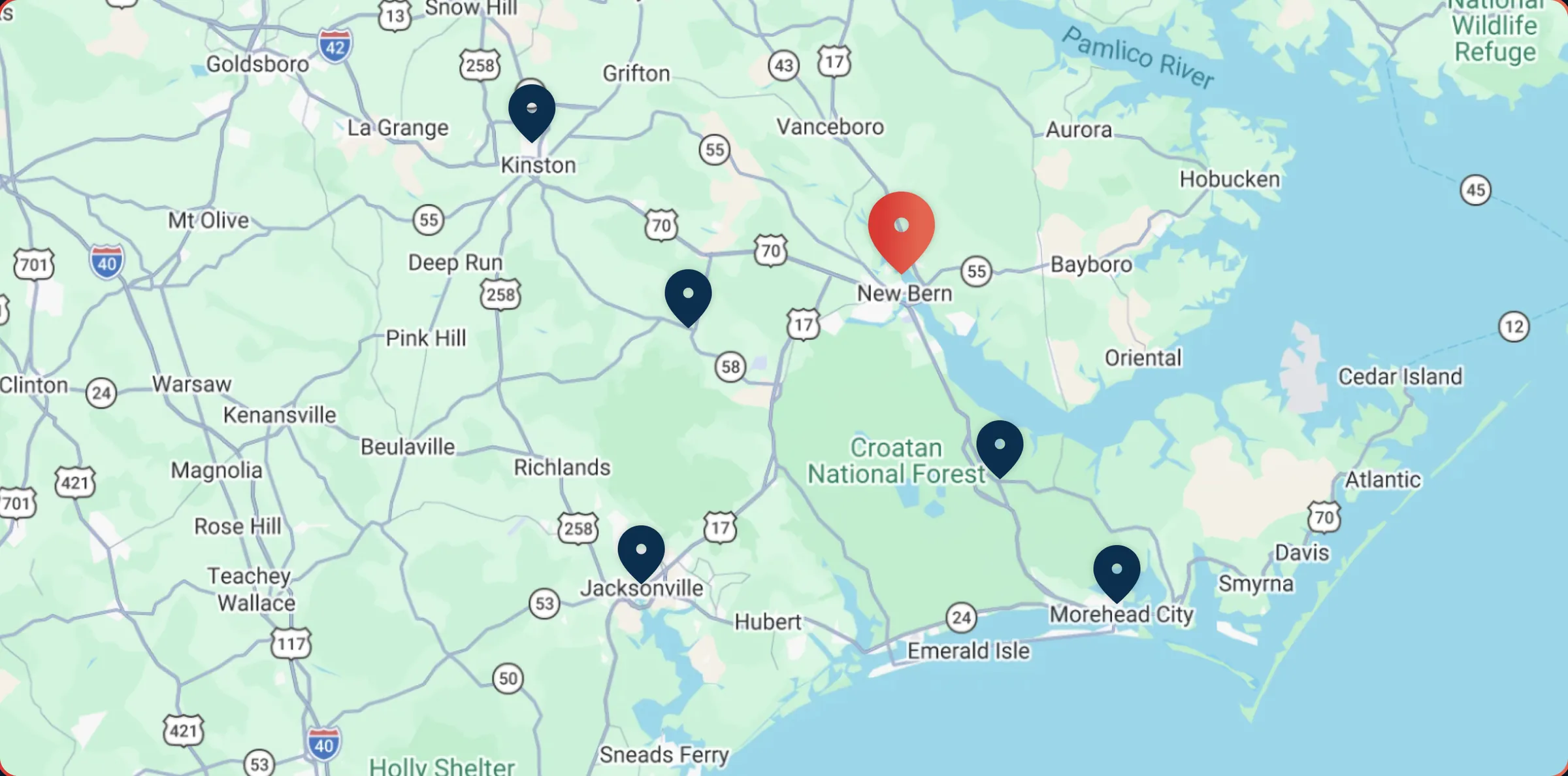
- New Bern, NC
- Morehead City, NC
- Jacksonville, NC
- Havelock, NC
- Trenton, NC
- Kinston, NC

Additional Communities Served
Don’t see your town listed? We regularly help customers in nearby communities throughout the region. Give us a call and we’ll let you know if we can reach you.
Keep Your Home Comfortable
Systems Your Sealed Ducts Serve Every Day
Duct sealing supports the equipment that moves air through your home. Each of these systems depends on ductwork that is sealed and balanced, so we review the whole air path. These services cover the systems we most often connect to ductwork in our service area.
Furnaces
Heating installation, repair and maintenance for homes that rely on warm air moving through ducts.
Learn More about FurnacesDucted heat pumps
Year-round heating and cooling through ductwork, with planned maintenance available.
Learn More about Ducted heat pumpsCentral air conditioning
Cooling systems that depend on sound ductwork to deliver air to each room.
Learn More about Central air conditioningPackaged units
Single-cabinet systems with installation, repair and maintenance options.
Learn More about Packaged unitsMobile and modular home HVAC
Heating, cooling and heat pump service for manufactured and modular homes.
Learn More about Mobile and modular home HVAC
Plan Your Next Step
Your New Bern HVAC Company for Ducts That Deliver Air
Duct sealing works best when we understand your home first. Tell us which rooms struggle, where you notice dust or drafts, and which heating and cooling equipment your ducts serve. Our team explains what the testing shows and why sealing is or is not the right next step, so you can decide with confidence. We also review how sealing fits the furnace, heat pump, air conditioner or packaged unit already in place, so nothing is recommended that your equipment cannot support. Every recommendation is written down so you can compare options at your own pace.
If a larger project is part of your plan, Service Finance is available for qualifying work, so the investment can be spread over time. Our maintenance plan adds planned care for the equipment that moves air through your ducts, with visits you can schedule around your household. Financing and planned care can work together, so the choice does not have to be all at once. Whether sealing is a stand-alone project or part of a larger comfort upgrade is a decision we make together, based on what your home needs. You will understand the reasons before you commit, and you are welcome to ask as many questions as you need before you decide.
Whether you live in New Bern or in one of the five communities we serve, reach out with your questions. We will review your concerns, explain our findings in writing and recommend only what your home needs, with every recommendation tied to measurements taken in your home. We appreciate the trust homeowners place in us when they invite us into their homes. You can also explore our full range of services to see how duct sealing fits with the rest of your comfort system.