
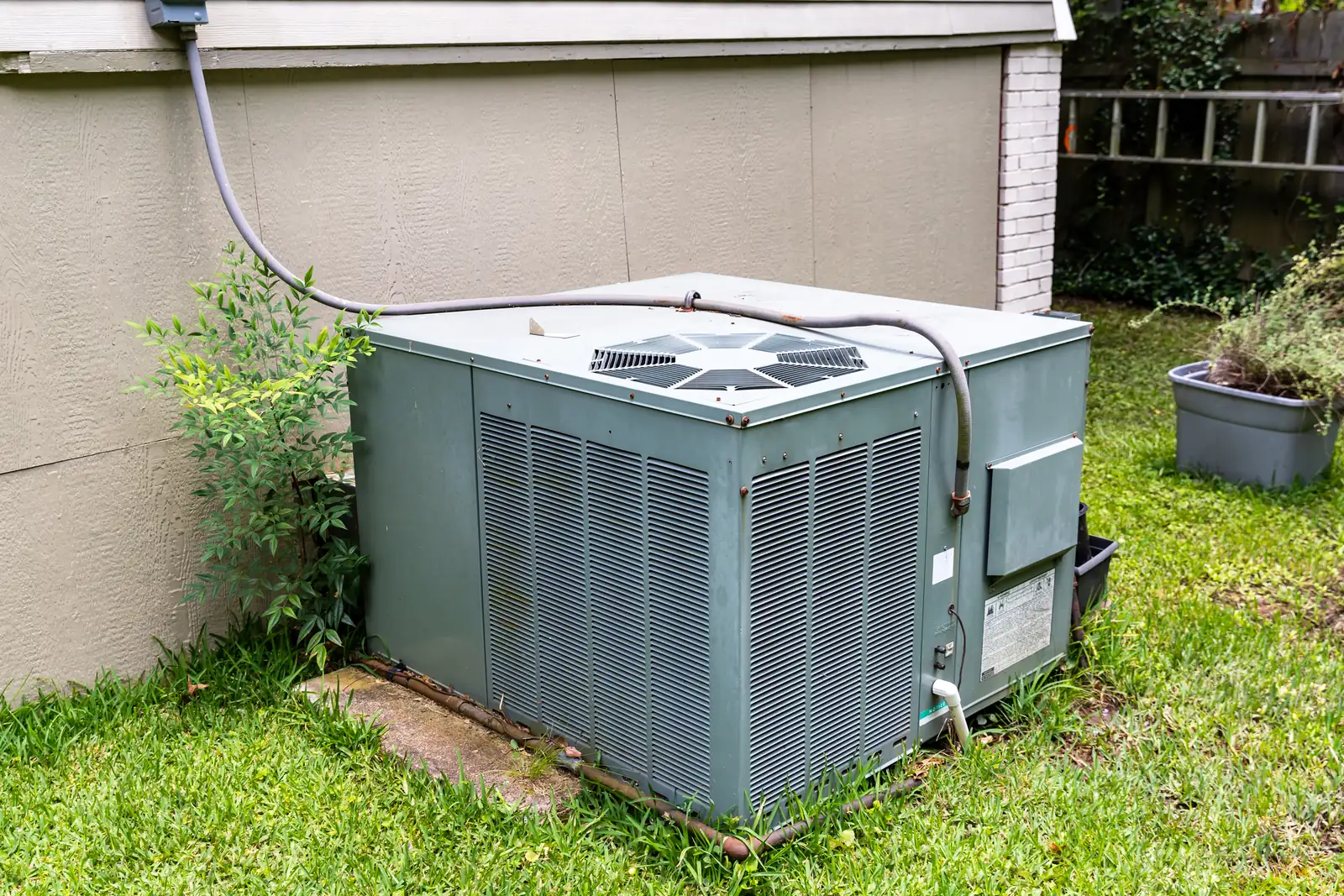
Packaged System Installation
Packaged Unit Installation in New Bern, NC
GP Heating & Cooling is a family-owned and locally-owned company based in New Bern, NC. We install new packaged units, which carry both heating and cooling in one outdoor cabinet, for homes without room for an indoor air handler or systems that have reached the end of their useful service. Every installation begins with a careful review of the property, its ductwork and its gas and electrical supply. We are an Armstrong ProTeam Dealer and a Ducane dealer, and we bring 22 years of experience to every project.
Why Our Installs Differ
Why Our Heating and Cooling Company Approaches Installs Differently
A packaged replacement changes the heating and cooling for the whole home at once, so the planning matters as much as the equipment. These six commitments shape how we handle each installation from the first walk-through to the final handoff.
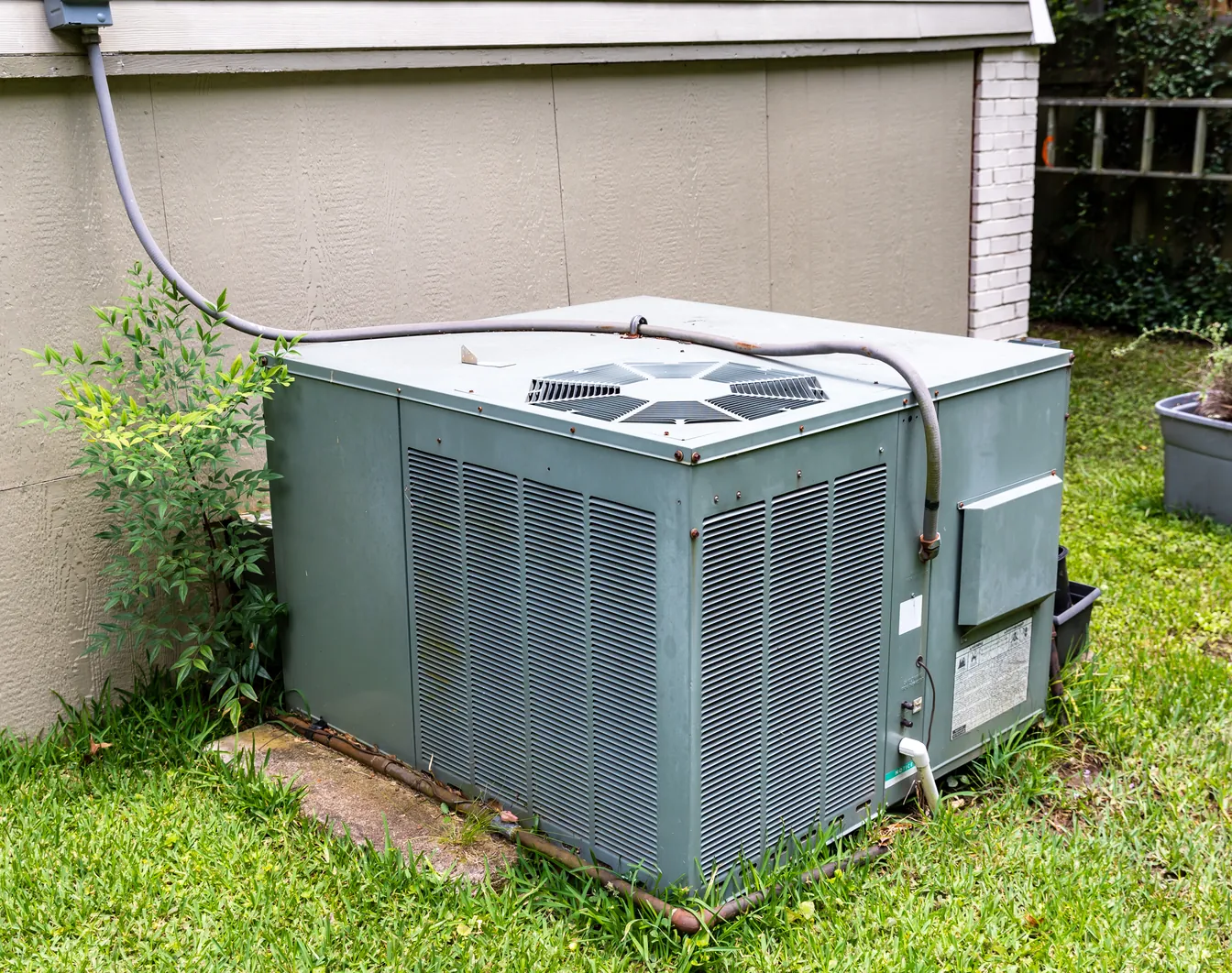
Long-term thinking from a family-owned business
A packaged cabinet is a decision that will affect the household for many seasons. As a family-owned business, we weigh durability, serviceability and the way your home is built ahead of speed or convenience. Learn about the people behind the work on our About Us page.
Community roots that go beyond the job
We are locally owned and operated, and we sponsor a local Christian school and a Sunday School recreation league, so our commitment to the area reaches well beyond a single project. Our standing in these towns depends on how each installation turns out, and we treat that responsibility seriously.
A review of the whole system before equipment is chosen
The cabinet depends on the ductwork, the gas supply, the electrical service and the pad or roof where it will sit. We check each of those pieces before we recommend a model, so the installation fits the building rather than the other way around.
Equipment choices shaped by two dealer partnerships
We are an Armstrong ProTeam Dealer and a Ducane dealer. Those relationships give us direct familiarity with the equipment lines, so we can compare options side by side instead of steering every household toward one model. That familiarity also keeps our team current on the lines we install.
Twenty-two years of experience behind each recommendation
GP Heating & Cooling was established in 2022, and the team behind it brings 22 years of experience in heating and cooling. That background lets us read the heating, cooling and airflow paths as one connected system.
Financing and maintenance options explained up front
Larger installations can be spread into manageable monthly payments through our financing options. Once the new cabinet is running, our maintenance plan can keep it on a planned schedule.
Start Your Planning
Tell Us About the Packaged Unit Your Home Needs
Share the age of the current system, the rooms that struggle to stay comfortable and any ductwork changes you have noticed, and our team will follow up with next steps. You can send those details through our contact page. If the system needs a repair rather than a new installation, our packaged unit repair page explains that process, and our packaged unit maintenance page covers planned tune-ups. Please include the town where the property is located so our team can confirm the project fits our service area. Our packaged unit overview lays out every option side by side, so you can see where installation fits.
The Installation Path
From Load Review to Homeowner Handoff
Each packaged installation follows the same planned path, so you know what happens before the crew arrives and what to expect at each stage of the work.
Step 1 of 5
Property Assessment and System Sizing
The first visit establishes what the home actually needs. We measure before we recommend, because the existing unit may have been sized for conditions that have since changed.
- Walk the home and note insulation, window exposure, ceiling heights and the rooms that run cold or hot.
- Compare the heating and cooling needs of the house against the capacity of each packaged model under consideration.
- Review how the household uses the home, including occupancy, thermostat habits and any sensitivity to humidity or dust.
- Discuss whether indoor air quality accessories, such as filtration or humidity control, should be planned alongside the new cabinet.
- Provide written notes on the sizing findings so you can compare your options at your own pace.
Step 2 of 5
Gas Supply, Electrical Service and Condensate Path
A packaged cabinet depends on reliable fuel, power and drainage, so we verify each connection point before a unit is selected.
- Confirm the gas supply, meter capacity and piping size that the heating section of the new cabinet requires.
- Check the electrical service, disconnect location and circuit requirements for the outdoor cabinet.
- Confirm that the disconnect and service clearances leave room for the electrical work the unit requires.
- Plan the condensate drain so moisture leaves the cabinet and does not pool beside the foundation.
- Identify any gas line work the project needs and schedule it alongside the installation.
Step 3 of 5
Ductwork Review and Fabrication Needs
The cabinet can only deliver conditioned air as well as the ductwork allows, so we inspect the supply and return paths before the unit is set.
- Measure the supply and return connections and check them against the airflow the new cabinet requires.
- Look for leaks, crushed sections and disconnected joints in the attic, crawl space or floor framing.
- Note any transition pieces or custom components needed for a precise fit, which our custom sheet metal fabrication team can produce.
- Confirm that the return air path draws enough air across the cabinet so the blower is not starved and the coil can perform as designed.
- Present any duct modifications as separate options with their own explanation, so no change is made without your approval.
Step 4 of 5
Pad or Roof Setting and Clearances
Placement affects service access and long-term durability, so we confirm the site before anything is lifted into position.
- Level the pad or confirm the rooftop support and safe access the cabinet requires.
- Check manufacturer clearances for airflow and service panels, including the distance from walls, shrubs and overhangs.
- Protect the surrounding area and, on replacement projects, disconnect the existing unit’s gas, electrical and duct connections before removal.
- Set the cabinet, secure it against movement and seal the duct connections so conditioned air does not escape at the joints.
- Check that the finished installation leaves panels, filters and controls reachable for a technician during future service visits.
Step 5 of 5
Startup Testing and Homeowner Handoff
The final step turns the new cabinet into a system you understand. We test the work before we leave, then review how it runs.
- Run the packaged unit through full heating and cooling cycles and confirm that the controls respond as designed.
- Measure supply air temperatures at several registers across the home and note any imbalance that needs attention.
- Check gas connections for leaks and complete combustion and carbon monoxide safety readings for any gas heating section.
- Walk you through the thermostat, the filter location and the service panel, and explain which signs point to a need for attention.
- Hand over written documentation of the installed equipment and startup readings, and discuss whether a maintenance plan suits the new system.
Financing
Flexible HVAC Financing for New Bern Homeowners
A new heating or cooling system is a major purchase, and it rarely arrives on a convenient schedule. We offer financing through Service Finance, so you can get the comfort your family needs now and pay for it over time.
Talk with our team about the system or repair you need, and we’ll help you get started on a Service Finance application. We’ll answer your questions along the way so you understand your options before you commit.

Financing through Service Finance makes it easier to invest in the right heating and cooling equipment for your home. Contact our team to learn more and apply.
Contact Us to Apply
Common Questions
Packaged Installation Questions Answered
The timeline depends on how much of the project changes. A replacement that uses the existing ductwork, gas supply and electrical service is generally simpler than one that needs duct modifications or utility work. Most projects move through the property review, cabinet setting, connections and startup testing. We review the expected schedule during your consultation, so you know what to plan for before any work begins.
We start with the heating and cooling needs of the home rather than the size of the unit being replaced, because an older system may have been sized for conditions that have since changed. We look at insulation, window exposure, ceiling heights and each floor’s layout, then compare packaged models against those findings. Each recommendation comes with a written explanation of why it fits.
In many cases it can, but the change affects the ductwork and the equipment placement. A split system uses an indoor air handler or furnace, while a packaged unit places those components in one outdoor cabinet, so the supply and return connections may need to move. We evaluate the existing duct layout first, then explain the changes a conversion requires and whether they are worth making.
Often it will, provided the ducts are sized correctly, sealed and connected to the right openings on the cabinet. Undersized, leaking or poorly routed ducts can limit airflow even when the equipment is well chosen. We inspect the duct system during the evaluation, show you what we find and present any modifications as options. No duct changes are scheduled until you approve them.
Not always. When the existing gas line and electrical service are in good condition and sized for the new cabinet, the installation can proceed without major utility changes. If the gas piping needs repair or resizing, or the electrical service needs a dedicated circuit or disconnect, we explain the work and how it fits the project. Gas connections are checked for leaks before the system is started.
Replacement projects include removing the existing system as part of the scope we review during the consultation. Before the old unit comes out, we disconnect its gas, electrical and duct connections and protect the surrounding area. Once the new cabinet is set and connected, we clean the work area and make sure the new unit remains accessible for future service.
No. A packaged unit is a self-contained cabinet, so the heating and cooling components sit together outdoors and there are no long refrigerant lines running between an outdoor condenser and an indoor coil. That simplifies the installation because the main connections are the gas supply, electrical service, condensate drain and ductwork. We confirm each of those connections before startup.
The answer depends on the age and condition of the system, the cost of the repair in front of you and how often the unit has needed attention. An older cabinet that has needed frequent repairs may justify replacement, while a newer one with a single failed part often does not. We lay out the options side by side with our findings, so the decision rests on facts about your equipment.
Before we leave, we run the packaged unit through full heating and cooling cycles and confirm the controls respond as designed. We measure supply air temperatures across several rooms, check gas connections and complete safety readings for any gas heating section. Then we walk you through the thermostat, the filter location and the signs that suggest the system needs attention, and leave written documentation of the installation.
Manufacturer coverage depends on the equipment you choose and the terms the manufacturer publishes at the time of purchase. We review those terms with you during the consultation, explain what the coverage includes and what it does not, and record the model and serial information for your files. Ask our team for the specific terms of any model before you decide.
Communities We Serve
Packaged Installation Across Our Service Area
Packaged installations reach these North Carolina communities from our New Bern base, and every project begins with the same property review. Each community receives the same clear explanation of the options before any equipment is selected. For a wider look at our coverage, see our service area overview.
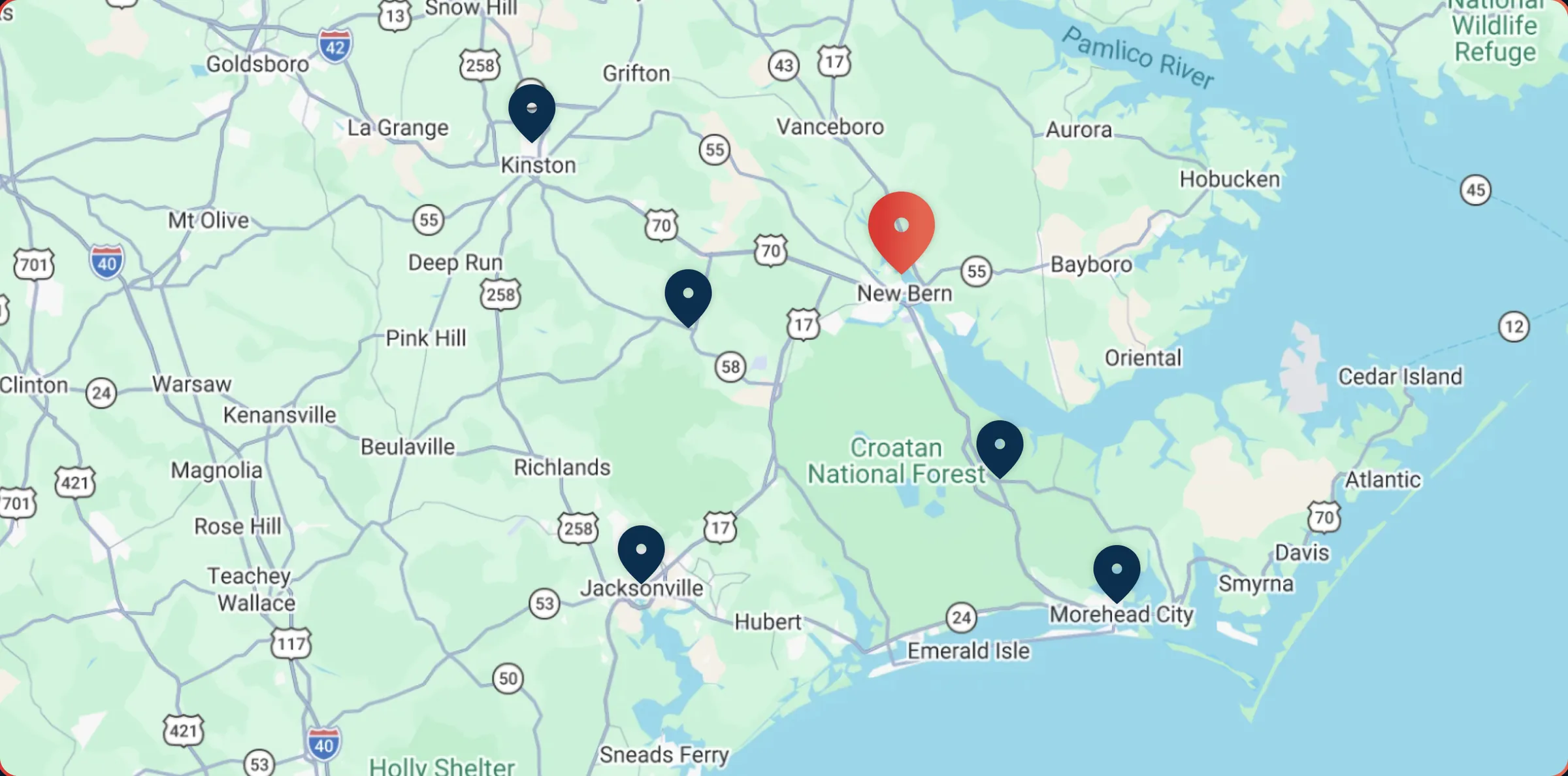
- New Bern, NC
- Morehead City, NC
- Jacksonville, NC
- Havelock, NC
- Trenton, NC
- Kinston, NC
Additional Communities Served
Don’t see your town listed? We regularly help customers in nearby communities throughout the region. Give us a call and we’ll let you know if we can reach you.
Alternatives to Consider
Other Systems Worth Comparing
Some homes are better served by a different system, so these options are worth comparing alongside a packaged unit.
Central air conditioning
Split-system cooling installation, repair and tune-ups for homes that already have ductwork and an indoor air handler or furnace.
Learn More about Central air conditioningDucted heat pumps
Year-round heating and cooling through ductwork, a useful comparison when you are weighing a packaged cabinet against a heat pump.
Learn More about Ducted heat pumpsFurnaces
Furnace installation and replacement for homes that prefer warm air from an indoor unit.
Learn More about FurnacesMini-split systems
Ductless heating and cooling for additions and individual rooms where new ductwork is not practical.
Learn More about Mini-split systemsMobile and modular home services
Heating, cooling and heat pump service for manufactured and modular homes with their own layouts.
Learn More about Mobile and modular home services
Next Step
Your New Bern Heating and Cooling Contractor for Packaged Systems
A packaged installation is a decision that shapes comfort for many seasons, so we want you to feel informed at every stage of the project. Our team reviews the home, explains the equipment options and walks you through the reasoning behind each recommendation, including the options that may not suit your property. You should never feel pressured into a cabinet you do not understand, and a clear written summary gives your household time to talk the decision through together.
Service Finance can make a larger replacement easier to budget, and a maintenance plan can keep the new cabinet on a planned schedule once it is running. Both options are explained in plain terms during your consultation, and you can take the time you need to compare them against your plans for the home. Approval and terms for financing are set by the lender, so review those details directly before you commit. Planned attention after installation is one of the simplest ways to protect the investment you have just made.
You can also explore our full range of services to see how packaged installation fits alongside the rest of your home’s heating and cooling. When you are ready, reach out to talk through your property and your current equipment, and we will explain what we find and what we recommend. Questions about the process are welcome before you decide, and our team will describe each stage of the installation in plain terms. Many households find that a written summary of the recommendation makes the decision easier to revisit with family. Wherever you are in the planning process, a conversation with our team can help you set priorities for the project.